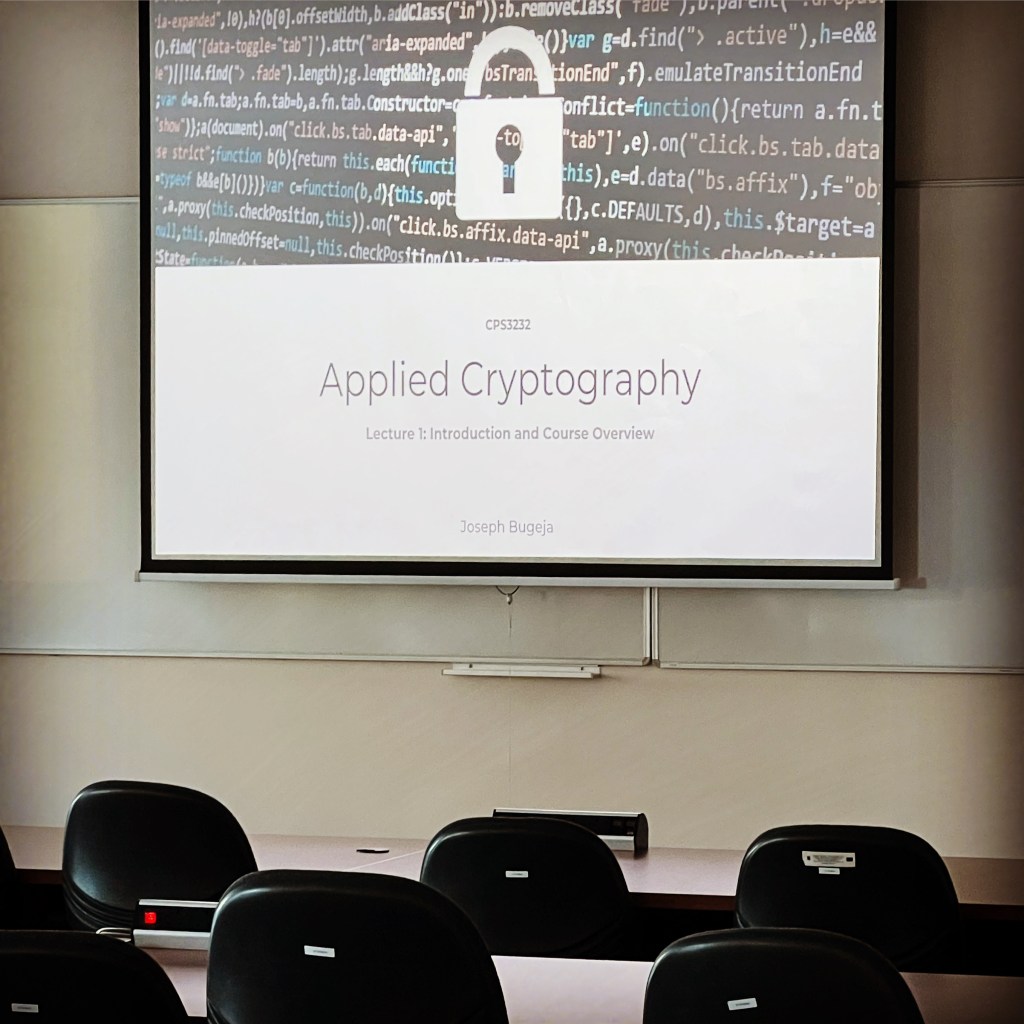
My First Lecture at the University of Malta

Snapshot of the title slide captured prior to the lesson.

I initiated the Applied Cryptography course at the University of Malta on Monday evening. As a cyber security professional and academic with a strong commitment to the field of information security, I am genuinely excited to be leading this specialized academic course this year.

Throughout the introductory lecture, I delved into the foundational concepts of cryptology, emphasizing its profound relevance within contemporary security applications. The pedagogical discourse traversed a diverse spectrum of topics, encompassing cryptographic mechanisms, the examination of classical substitution ciphers and their formal representations, a concise introduction to cryptanalysis, and more.

I am excited to be a part of this journey and look forward to the next lecture in this course on Monday!

Tips for Excelling in Your Ph.D. Defense

Photo by Lukas on Pexels.com

As you embark on the final leg of your academic journey, the Ph.D. defense stands as a pivotal milestone. This defining moment offers you the chance to present your research to a panel of esteemed experts and vigorously defend your work against their probing inquiries. Successfully conquering your defense will culminate in the grand achievement of being awarded your Ph.D. degree.

Drawing from my own personal experience, where I defended my thesis now over two years ago, I am eager to share with you some tips on how to prepare for your own Ph.D. defense:

  1. Embrace an intimate familiarity with your thesis: Your thesis should become ingrained in your mind. Be ready to elucidate your research questions, methods, findings, and conclusions with utmost precision and detail.
  2. Rehearse your presentation relentlessly: Practice makes perfect, as they say. Take advantage of a mirror, or better yet, enlist the support of a trusted friend or family member as your audience. This exercise will help you become comfortable with your material and identify areas that may require improvement.
  3. Anticipate the inevitable: Ponder the possible questions your opponent, examiner, committee members, and perhaps the invited audience might pose. Consider the strengths and weaknesses of your research, as well as the broader implications of your findings. Equip yourself with clear and concise answers to address these questions with confidence.
  4. Attend other Ph.D. defenses: Make an effort to attend other Ph.D. defenses within your department or university. Observing how fellow students defend their work offers invaluable insights into different presentation styles, strategies for handling questions, and a broader perspective on the defense process.

By incorporating these tips into your preparation regimen, you can enhance your chances of a triumphant Ph.D. defense. With meticulous groundwork, you are poised to confidently defend your work and emerge triumphant in your Ph.D. defense.

Understanding the Benefits of Academic Freedom

Photo by Pixabay on Pexels.com

Academic freedom is a fundamental right that ensures professors and students can conduct research, teach, and discuss ideas without fear of institutional censorship. This right is enshrined in many of the founding documents of higher education, including the American Association of University Professors’ 1940 Statement of Principles on Academic Freedom and Tenure, which affirms that “Academic freedom is essential to these purposes and applies to both teaching and research. Freedom in research is fundamental to the advancement of truth.”

Academic freedom is essential for the advancement of knowledge and the protection of academic integrity. It is also beneficial for universities and colleges, providing them with the ability to recruit the best faculty and students and attract high-level research funding. Additionally, it provides an environment in which creativity and innovation can thrive. In practice, academic freedom enables faculty to pursue research and teaching in any field of their choosing and to express their views in the classroom and the curriculum, irrespective of their popularity or controversy. Similarly, students are allowed to challenge and debate ideas in the classroom without fear of repercussions, promoting critical thinking and the exploration of diverse perspectives.

In conclusion, academic freedom is an integral part of a free and open society, essential for the continued advancement of knowledge and the protection of academic integrity. It should be respected and protected in order to ensure the continued growth of knowledge and the success of academic institutions.