How To Achieve Flow When Writing A Research Paper

When working on your Ph.D., it is imperative to maintain a state of flow. Maintaining a state of flow will give you more motivation towards achieving your goals and finishing work in a timely manner. In addition, maintaining a state of flow will help keep you from getting distracted by less important tasks that are not related to your work, such as checking Instagram, TikTok, Twitter, and other social media platforms.

As Mihaly Csikszentmihalyi asserts in his book “Flow: The Psychology of Optimal Experience”, flow is “the state in which people are so involved in an activity that nothing else seems to matter; the experience itself is so enjoyable that people will do it even at great cost, for the sheer sake of doing it”. Flow is a state in which you are so focused on your work that all other distractions fade away. It is a state in which you are completely immersed in what you are doing, and it is very difficult to pull you out of it. Many Ph.D. students struggle with maintaining a state of flow in their research work. They want to work hard and do well, but they just cannot seem to find the motivation or energy needed to complete their projects. Here are four tips that might help you achieve flow:

Photo by Scott Graham on Unsplash

1)  If you want to be able to write effectively, then you need to set aside time each day for writing. This can be done by creating a schedule and sticking to it. The schedule needs to include the amount of time that you will be spending on your writing tasks each day, as well as any breaks that you plan on taking during the day.

2) Before sitting down, make sure you have everything ready — your notes/laptop/pencils/paper/etc. — so that when it comes time to work on something important, there are no delays caused by having to look for something else first, rather than just getting started right away without any more delays than necessary.

3) Disable any notifications from social media platforms including televisions and phones so that they do not distract you while working on your project. You can always check these platforms or media after completing your tasks for the day, but if they are distracting, then they should be turned off for better focus during working hours.

4) Take frequent breaks, but keep them short and to the point. Consider also using the Pomodoro Technique. The Pomodoro Technique is a time management technique where you work using 25-minute work sprints and then enjoy a 5-minute break.

It is just as important to maintain a state of flow as it is to establish one at the start of your work. The two things go hand in hand. However, maintaining flow can be more difficult at times because some things that interrupt flow are not always avoidable. In order to stay on top of your Ph.D. while maintaining a state of flow, you need to be organized and efficient. By setting aside enough time each day for writing and making sure that you have everything ready before sitting down to work, you will be able to focus more fully on the task at hand, which should contribute towards maintaining a state of flow.
Teacher Training in Blekinge

On Wednesday, August 18th, I attended the Teaching Apprenticeship conference at Blekinge University of Technology. The conference was held in a hybrid format, meaning that we could attend sessions both in person and remotely. The conference was informative, and I came away with a greater understanding of how to further improve my teaching.

The theme for this year’s conference was active academic teaching for pedagogical development. The goal of this theme is to increase awareness of educational quality and learning in higher education among educators, educational developers, librarians, and other people with an interest in the subject.

I really enjoyed the keynote given by Klara Bolander Laksov and Max Scheja, both professors of higher education pedagogy. They discussed the dimensions of academic teachership, the role of pedagogical leadership, and provided examples of what can be done at various levels of academic teachership.  I also enjoyed learning more about blended learning from a theoretical perspective. New methods of learning—and new technology to support them—are necessary for students who will be entering the workforce in just a few short years.

A primary objective of higher education is to provide students with the ability to think independently and critically. The ability to use knowledge and skills with judgment, as well as demonstrate higher-level thinking skills, is essential in many academic disciplines. As teachers of students across Sweden and around the world, we must be willing to change our teaching styles and adapt to new methods and technologies to aid in fostering critical thinking in our students.

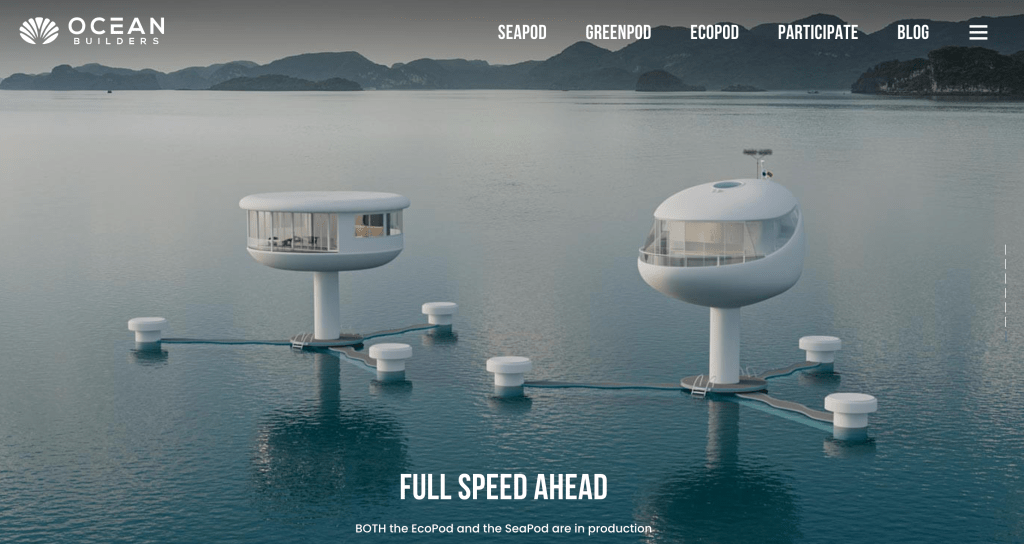
The future of luxury living is here, and it is floating

Ocean Builders has just unveiled its fleet of revolutionary living pods, which bring together luxury living and smart home technology. The pods are currently under construction in the Linton Bay Marina on the north coast of Panama and are described as the “world’s first eco-restorative homes”.

Some things, like food and medication, may be delivered by drones, while an autonomous vessel may be utilized as an ocean recycling vessel to collect waste and maintain a clean environment. The pods will also be equipped with special “smart rings” that enable residents to unlock doors and switch their music on at the wave of a hand.

Would you be interested in owning one of these homes? Do you think these homes are better equipped to safeguard our privacy and security? 

See the original article published on CNN Travel here: https://www.cnn.com/travel/article/eco-friendly-futuristic-floating-homes-under-construction/index.html

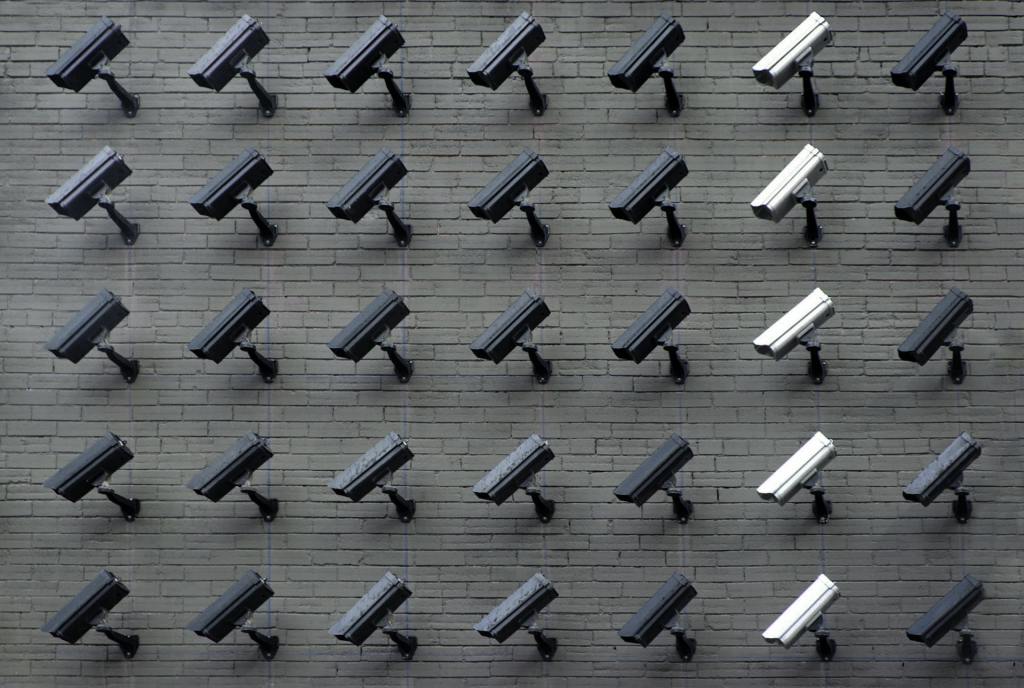
The FTC wants to crack down on mass surveillance 

The practice of gathering, analyzing, and profiting from data about individuals is known as commercial surveillance. Due to the volume of data gathered by some companies, individuals may be vulnerable to identity theft and hacking. Indeed, the dangers and stakes of errors, deception, manipulation, and other abuses have increased as a result of mass surveillance. The Federal Trade Commission (FTC) is seeking input from the general public on whether additional regulations are necessary to safeguard individuals’ privacy and personal data in the commercial surveillance economy.

Photo by Lianhao Qu on Unsplash.

I advise you to attend the open forum on September 8, 2022, particularly if you are a researcher focusing on the topic of privacy and security. Also, if you are developing your own system or perhaps planning your next research project, I highly recommend you look at some of the topics identified by the FTC as these are likely to affect the design of your project. Here are the topics mentioned: “Harms to Consumers”, “Harms to Children”, “Costs and Benefits”, “Regulations”, “Automated Systems”, “Discrimination”, “Consumer Consent”, “Notice, Transparency, and Disclosure”, “Remedies”, and “Obsolescence”. Pay particular attention to the topic “Automated Systems” if your system uses AI/ML technologies.

More information can be found here: https://www.ftc.gov/legal-library/browse/federal-register-notices/commercial-surveillance-data-security-rulemaking and https://www.ftc.gov/news-events/news/press-releases/2022/08/ftc-explores-rules-cracking-down-commercial-surveillance-lax-data-security-practices

Never Underestimate the Power of Networking: Tips for Connecting with People at Conferences

Successful people are good at networking. The value of effective networking can be seen in the job market. Many application forms ask for references from several people. If you have an effective network, these people could also be your referees, and you can choose those who would be best placed to be asked about your suitability for a role.

Networking at conferences is a great way to make connections and find out about what other businesses are doing. It is always best to meet as many people as possible, but one should not be afraid to target their networking efforts at those who seem more interesting or relevant to them.

Here are five tips to be effective at networking at these important events:

1) Planning for the conference. You should be prepared before you even arrive at the conference. Make sure that you are familiar with the program, who is speaking, and what topics will be covered. This will help you decide where and when it would be most useful for you to meet people and make connections. Also, check out the website of the organization hosting the event so that you can see if there are any extra events taking place during the breaks (e.g., after lunch), which might provide further opportunities for networking.

2) Figure out who you need to meet and find them. If you do not know what they look like, ask a colleague. Highlight their names and search for them on the Internet so that you know what they look like.

3) Introductions. Introductions can be made in many ways – when you first arrive at the conference venue, walk around and introduce yourself to people who may benefit from knowing more about what you do or could offer them. Instead of hovering around one person and waiting for them to approach you, make the first move yourself.

4) Take part in the dinner. It is important to remember that it is the coffee/tea breaks, lunches, and dinners that are the prime networking opportunities, so do not stick all the time with your friends and colleagues. Also, remember not to drink too much or choose something really messy to eat.

5) Wear appropriate attire. If you want to be viewed as a serious professional, wear smart clothes. Wearing jeans to a networking event may not be ideal for the type of people you want to meet.

Networking is a skill that can be learned and developed, but it takes time to get good at it. Effective networking means being proactive about your own career progression and developing the skills to be a good networker. It is not difficult to do, but it does require some effort, thought, and planning. I hope that with this post you have learned some useful tips for building your network of connections. 

Threat Modeling: Some of the Best Methods

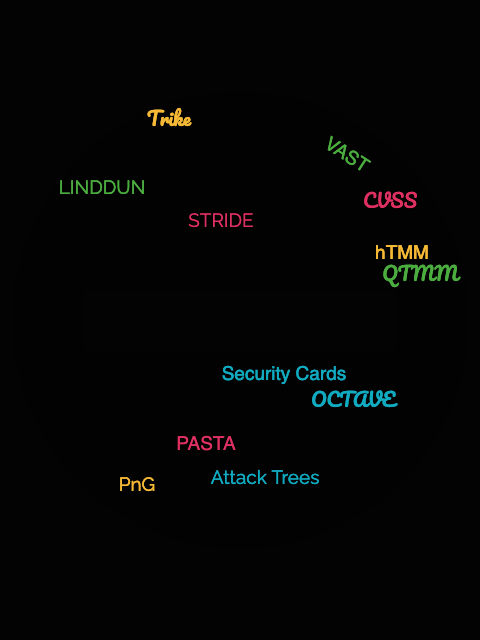
Threat modeling methods are a set of general principles and practices for identifying cyber threats to computer systems and software. These methods can be applied during the design phase of new systems or when assessing existing security controls against new threats. There are several threat modeling methodologies in use today, ranging from informal processes to formalized models that can be captured within software tools. A summary of some of the most popular threat modeling methods is provided below:

• Spoofing, Tampering, Repudiation, Information Disclosure, Denial of Service, and Elevation of privilege (STRIDE) 

• Process for Attack Simulation and Threat Analysis (PASTA)

• Operationally Critical Threat, Asset, and Vulnerability Evaluation (OCTAVE)

• Trike

• Visual, Agile, and Simple Threat modeling (VAST)

• Common Vulnerability Scoring System (CVSS)

• Attack Trees 

• Persona non grata (PnG) 

• Security Cards 

• Hybrid Threat Modelling Method (hTMM)

• Quantitative Threat Modelling Method (QTMM)

• Linkability, Identifiability, Non-repudiation, Detectability, Disclosure of information, Unawareness, and Non-compliance (LINDDUN)

All of the above methods are designed to detect potential threats, except for CVSS. The number and types of threats will vary considerably between the different methods, as well as the quality and consistency of the methods. Which one is your favorite threat modeling method? Are you interested in using some of the methods above for your company or research project?

Corporate Security Standards, Best Practices, and Frameworks

Effective information security management involves the use of standardized frameworks to guide decisions pertaining to security. All organizations have a responsibility to safeguard their information assets and reduce risk by using well-defined frameworks that are supported by corporate standards and best practices.

Over the years, many such standards, best practices, and frameworks have been developed for supporting information security managers. Along with ensuring that correct security controls are implemented, it is also important to be able to build and develop the business, IT, and security processes in a systematic and controlled manner. The security controls can be seen as the objects, and the processes are how these objects are used. 

A simple depiction of the different security standards, best practices, and frameworks is shown below.

If you wish to learn about any of the above, please get in touch. You are also invited to suggest themes for me to write about.

Cyber Threat Maps

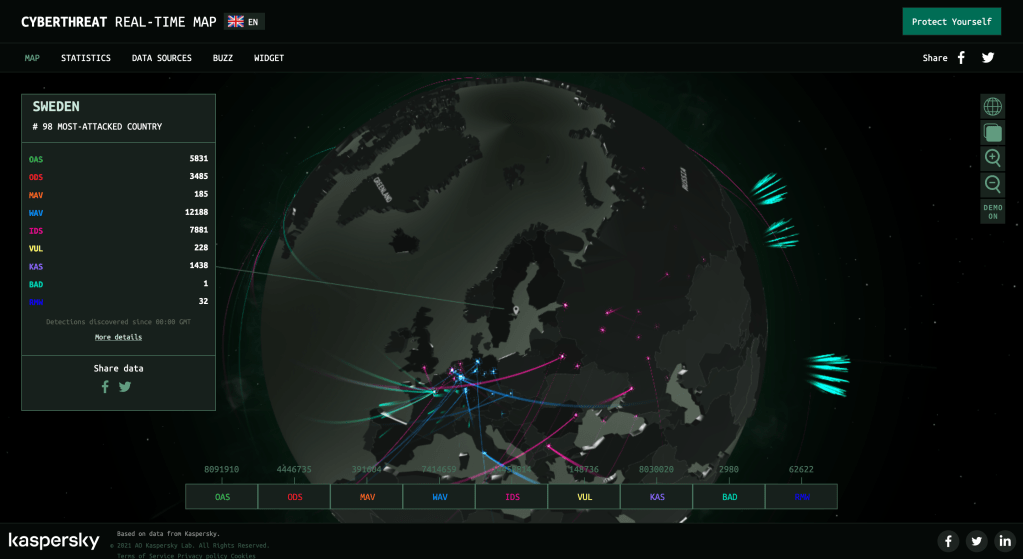
A cyber threat map, sometimes known as a cyber attack map, is a live map of current computer security attacks. These maps allow one to observe attacks as they pass through countries and continents. The majority of the cyber threat maps resemble video games, with colorful light beams indicating attacks from one region of the world to another.

Cyber threat maps can be highly useful in examining past attacks in terms of locations, volumes, and patterns. They can also help someone who is just starting out in their studies to acquire a sense of what is involved in the intricate world of cybersecurity. Last week, I had my introductory lecture on cyber security at Malmö University. I used cyber threat maps in my lecture to help raise awareness of how prevalent cyber security attacks are.

Kaspersky Cyberthreat Real-Time Map

Here are three of my favorite cyber threat maps (listed in no particular order):

Check Point ThreatCloud Live Cyber Threat Map

FireEye Cyber Threat Map

Kaspersky Cyberthreat Real-Time Map

If you want to learn more about the topic of attack detection and how cyber threat maps work, you are welcome to get in touch.

The Benefits and Drawbacks of Doing a Ph.D. at Different Times in Your Life 

A Ph.D. is a big commitment, and there is no doubt that it is a big investment in your future career. Figuring out when to make this investment can be tricky, but there are a few factors to consider to find the right time for you.

For most people, their 20s are the perfect time to do a Ph.D. That is when your career is just beginning, you can take advantage of the opportunities that being a student provides, and you still have lots of energy and enthusiasm for the subject after several years of hard work. The problem, though, with youth is that they may not be adequately aware of the commitment a Ph.D. requires. One can argue that they are not mature enough to understand that they will need to work long hours to do well.

For other people, there are many benefits to starting a Ph.D. as late as in their 50s or 60s. You might have already achieved financial stability or professional goals, and carrying on with a Ph.D. may be something you want to do for yourself. On the other hand, it can be harder to do a Ph.D. as an older student because of a lack of time and energy.

Overall, the benefits and drawbacks of doing a Ph.D. at different ages depend on individual circumstances and goals. But your life stage will have a significant impact on your Ph.D experience and your career prospects. I think, overall, the right time to do a Ph.D. is when you have a stable life. If you are a single person, it is also important to make sure that you have enough time to devote to your research and still have the ability to have a social life.

You are welcome to contact me for more information and tips on what it is like to be a Ph.D. student, particularly in Sweden, but also worldwide.

How to Find a Good Research Topic?

Finding a good research topic is not an easy task. Rookies and even seasoned professionals struggle with brainstorming about topics in academic or workplace settings. If you have not already been through the process of selecting a dissertation topic and writing your Ph.D., then it is best to think about suitable research topics before starting work on your dissertation.

There are numerous research topics that you can investigate and write about. Whether you choose to specialize or explore different areas at the same time, you need to ensure that your research topic will help establish your reputation as a professional in the field. The most important thing to remember when choosing a study topic to write about is to choose one that has a lot of promise.

There are various ways to find a good topic. You could find a gap in the scientific literature, you could look into emerging technologies, or you could focus on an issue that has personal meaning for you. No matter how you go about it, it is important to familiarize yourself with a topic before diving right in.

A good research topic is likely to carry you through your entire thesis and/or dissertation process. While the process of finding a topic may be difficult and time-consuming, the rewards are great. When done correctly and with effort, this will be a good exercise for you and will help you in the future. Once you have the right topic, your thesis will come to you naturally.

If you need help deciding on a topic for your thesis or your next paper, please do not hesitate to contact me.