The Importance of Information Ethics in the Digital Age

Over the years, the world has witnessed a technological evolution that has resulted in the World Wide Web becoming a location where information about individuals is acquired and spread. Information ethics is a subset of ethics that investigates the impact of information technology on society. It draws on a variety of fields, including philosophy, law, and computer science. Information ethics seeks to assist us in thinking about how we, as individuals, companies, governments, and societies, think about information: what it is, where it comes from, and how we use it. With the rapid rise of ubiquitous computing and networks, it is becoming an increasingly essential topic of research.

As our world gets more interconnected, individuals must make more responsible decisions about how they acquire, use, and share information with others. Making these decisions can be challenging at times, especially when there is little information available to assist us in deciding what is acceptable and what is not. If one’s actions or inactions have the potential to cause harm to others, one should be held accountable. Information ethics looks at what is right and wrong in relation to information systems. But where can we find these rules, and how can we apply them to the Internet, particularly to the Internet of Things, where certain key decisions are made automatically by machines?

This is a topic that I have been researching for the past few months. I was able also to publish a paper on this topic. If you are a scholar or simply are interested to explore ethics, I recommend reading the book “Ethics & Technology: Controversies, Questions, and Strategies for Ethical Computing” by Herman T. Tavani.

The Right Way to Review a Scholarly Manuscript for a Journal

A manuscript is a document that is submitted to a publisher for publication as a book, article, or other type of written work. A journal article is a piece of writing that is published in a scholarly journal.

To be indexed, the scholarly journal must have been examined by experts in the field as well as independent scholars who are not affiliated with the authors’ institution(s). The criterion for inclusion can differ from one journal to another.

Reviewing a manuscript.

Reviewers are supposed to provide authors with constructive feedback. They should discuss what is good about the manuscript, i.e., its strengths, and how it could be improved, i.e., its weaknesses. As far as possible, reviewers should refrain from passing judgment on how good or awful they believe the work is, instead focusing on what areas of content are well implemented and which could use better. When reviewing a manuscript, I tend to follow the three-step procedure described below.

First, I read the entire manuscript and jot down any remarks that come to mind as a result of the reading. Following that, I generate questions regarding the language, such as what appears to be confusing or unclear, and whether sections of the text may be enhanced or expanded upon. Aspects I focus on include the manuscript’s: structure and content; novelty, originality, and empirical validity; use of suitable methodology; and clarity and precision of communication. Finally, I draft comments in the form of questions and editing suggestions for the authors but also keeping in mind the intended audience of the manuscript.

Peer review is an important aspect of the scholarly process since it ensures that published work meets standards of quality and originality. However, peer review takes time and can be difficult to implement on a large scale.

If you wish to learn more about reviewing scholarly publications, please contact me or leave a comment below. Also, if you are an author and you need a reviewer for your manuscript, you are welcome to get in touch.

My FOSAD experience and Ph.D. security courses

Going back to the summer of 2016, I had the opportunity to attend a summer school on information security. It was the International School on Foundations of Security Analysis and Design (FOSAD) held in the University Residential Center of Bertinoro, Italy. FOSAD is one of the best Ph.D. summer schools I have ever attended.

There were various outstanding and demanding presentations on a wide range of topics, including mathematical models, analysis tools, and Internet security, as well as formal verification of security protocol implementations, practical system security, and others. We also covered information security from a practical perspective as well.

Aside from education, we also enjoyed the Italian countryside, breathtaking views, exquisite food, and some local wine. I had the opportunity to meet and mingle with exceptional students from all around the world, as well as professors from renowned universities. This also helped me in the expansion of my academic network.

If you are a Ph.D. student or simply you want to delve deeper into the intricate world of information security, I recommend attending FOSAD, preferably in person. It is a challenging summer school, but it is one of the best schools I have ever attended.

Here is a group photo from that event.

FOSAD 2016 group photo (adapted from http://www.sti.uniurb.it)

More details about FOSAD can be found on their website: https://sites.google.com/uniurb.it/fosad

Finally, if you want to learn more about security-related Ph.D. courses organized in Sweden, I highly recommend that you visit the website: https://swits.hotell.kau.se/Courses/SWITS-PhD-courses-in-IT-security.htm

Also, please feel free to drop me an email or a tweet in case you want to know more about Ph.D. courses in general.

Life as a postdoc

What is a postdoc? A postdoctoral researcher (postdoc) is a scientist who receives advanced training in a certain domain by collaborating with a subject matter expert. It is a temporary position that bridges the gap between a Ph.D. and a career in academia. There is no other job like this. You get to choose what you want to accomplish and how you want to do it as a postdoc. You may work on new projects almost autonomously or design your research projects with the help of your mentors. 

My work as a postdoc in computer science focuses mainly on cyber security and digital privacy. Most of my days are spent researching topics like machine learning and artificial intelligence, as well as how they may be utilised to automate security processes and privacy management on the Internet of Things. I examine solutions that have been developed to assist secure systems and user data against evolving threats. Some of the domains I am researching are related to smart buildings and smart homes.

Life as a postdoc can be challenging, but it is also full of opportunities. Aside from your research tasks, which will mostly revolve around publishing, you will be required to take on responsibilities that go beyond those of your Ph.D. You could be handling administrative tasks, including funding applications and working long hours in the lab, as well as lecturing and supervising Bachelor’s or Master’s students. Fortunately, I had the opportunity to complete the majority of the aforementioned activities throughout my Ph.D.

What else can I say? On a typical day, there is rarely a moment when I am bored or feel as if I do not have enough to do. You will likely find a large amount of freedom in what you choose to focus on. You do not need to think about whether you are using your time well because there is so much interesting work to be pursued! Of course, I am biased here because my postdoc themes are partly related to what I studied during my doctoral studies and on which I have industrial expertise.

If you want to learn more about postdoc life in Sweden, have questions about my research interests, or simply want to get in touch, you are welcome to email or tweet me.

The Ph.D. Thesis of the Year Award

I am incredibly honoured and humbled to receive the Ph.D. Thesis of the Year Award (Årets avhandling) in Computer Science from Malmö University in Sweden. This prize extremely acknowledges my 5+ years of research on the topic of threats and risks affecting IoT-based smart homes.

Ph.D. Thesis of the Year Award (Årets avhandling) in Computer Science (2021).

Learn more about the award by clicking here. Furthermore, you can access the presentation I delivered during that event by clicking here.

The Honourable Doctoral Speech

On Wednesday, October 13th, I was invited to a graduation dinner with the new doctoral grads, professors, and distinguished guests at the incredibly magnificent and historic Rådhus (City Hall). At that time, I was awarded the honour of delivering the doctoral speech. Here is a photo of me giving the speech in front of 150 guests.

Doctoral Speech at Malmö Rådhus (15-Oct-2021).

I include here an excerpt of my speech:

Dear Madam Mayor of Malmö, Madam Chairman of Malmö University, Madam Vice-Chancellor, Honorary Doctor, new doctors and professors. Dear colleagues, students and distinguished guests! Ladies and gentlemen!

Good evening to you all! I am beyond honoured to stand before you today and give this speech.

To begin with, I would like to congratulate the graduating students, including myself, who are here today. It has never been an easy road, but like every other adventure with a beginning, this has also come to an end, leaving each of us better than we started.

Six years ago, I moved to Malmö to pursue my dreams. The PhD was a journey of hard work, dedication, and resilience – there are no roses without rain. But I have found this journey to be incredibly freeing and also fun. It was so far, the deepest and the most meaningful experience of my life.

In case you would like to have a copy of my three-minute speech kindly get in touch.

Memories of a Good Seminar

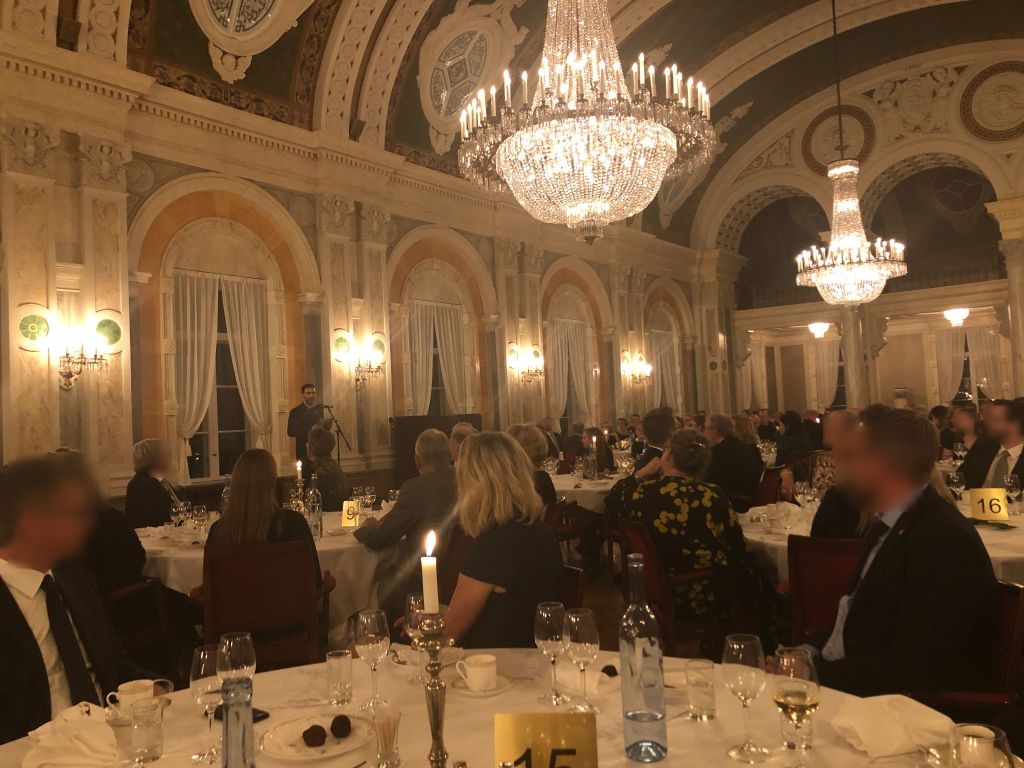
It has been a bit more than 2 years ago I defended my Licentiate thesis. Here is a wonderful memory from that time! A lot of things have changed since then in the smart home world and also in the course of my research and academic career.


In case you have queries just feel free to get in touch! I am also very much involved in supervising theses on cutting edge technologies of the like of autonomous drones, smart cities, to more industry-oriented work such as measuring the effects of GDPR on IoT consumers.

My Final Seminar

On September 18, I had the opportunity to present my PhD work to my fellow colleagues at Malmö University.  I had a 25 minutes slot, over Zoom, where essentially I summarized my research topic and presented my main contributions to the scholarly and industry community.

The discussion was led by Assoc. Prof. Martin Boldt from Blekinge Institute of Technology.  We had a very detailed and insightful 90 minutes conversation about smart homes, IoT, security and privacy.  After the meeting, I also received detailed written feedback about my work.

Some interesting points raised during our exchange are how homes are evolving and becoming more interconnected to different networks and services (whether it is the entertainment providers, healthcare providers, smart grids, and more).  With this evolution, the role and function of our home but as well our expectations of privacy are changing.  What if our intimate data gets in the hands of criminals? What if companies providing our services get hacked? What if our home technology is covertly spying on our children? These are some of the topics we talked about.

You can take a look at a redacted version of my presentation here.  A full version of the presentation will be uploaded in due time.

My take on internships, summer schools, and exchanges

Earlier this year, I was interviewed about traveling opportunities for doctoral students, and experiences gained pursuing various internships, summer schools, and exchanges as a visiting scholar.

Some of the points I emphasized are that traveling broadens your horizons and that when well-planned can help you along in your academic journey. For instance, you may come to learn a new perspective on your research that you may have not considered or explored before, and as well learn about potential pitfalls. Another thing is that you might meet people who have strong academic networks. These people may help you widen your academic network and may play a role in your future endeavors.

You can access the full article by clicking here. If you are a student, or maybe a prospective one, I highly encourage you to seize traveling opportunities related to your studies.

Also, feel free to drop me a message if you want to know more about my experiences.

Using Mindmaps to Organize My Writing

Especially, when working with a long manuscript but as well when you want to organize concepts and brainstorm ideas, mind maps offer a great visual tool for helping in that.

You can draw mind maps by hand but personally, I prefer to use software tools for this. A tool that I find particularly effective is XMind. I have used the free version of this software to layout the structure of my thesis. Once you know the shortcuts keys you can layout a structure in minutes and then refine it accordingly.

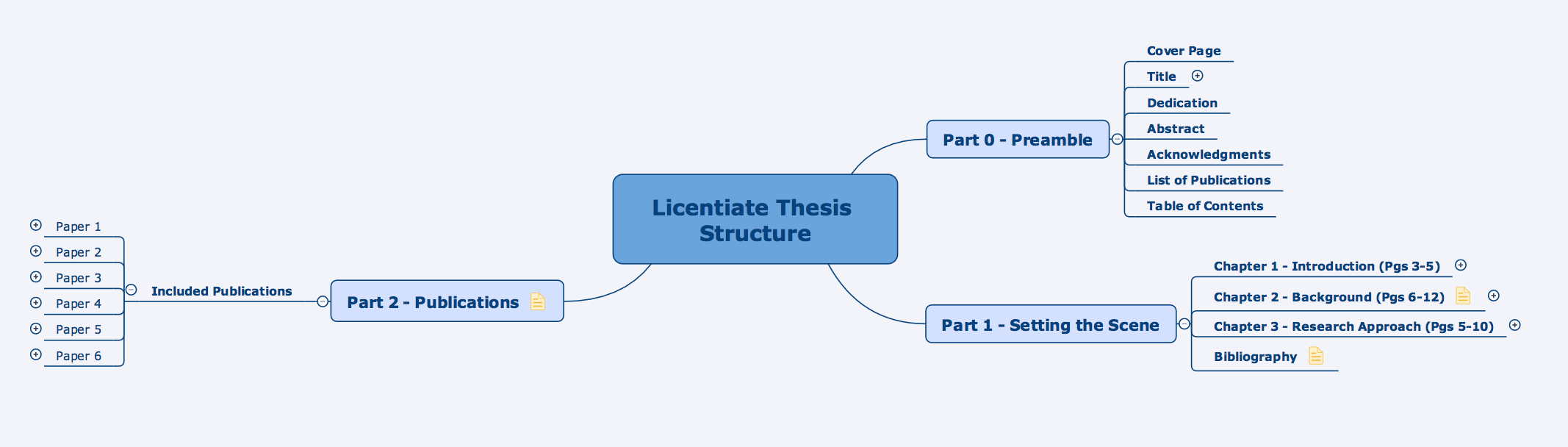
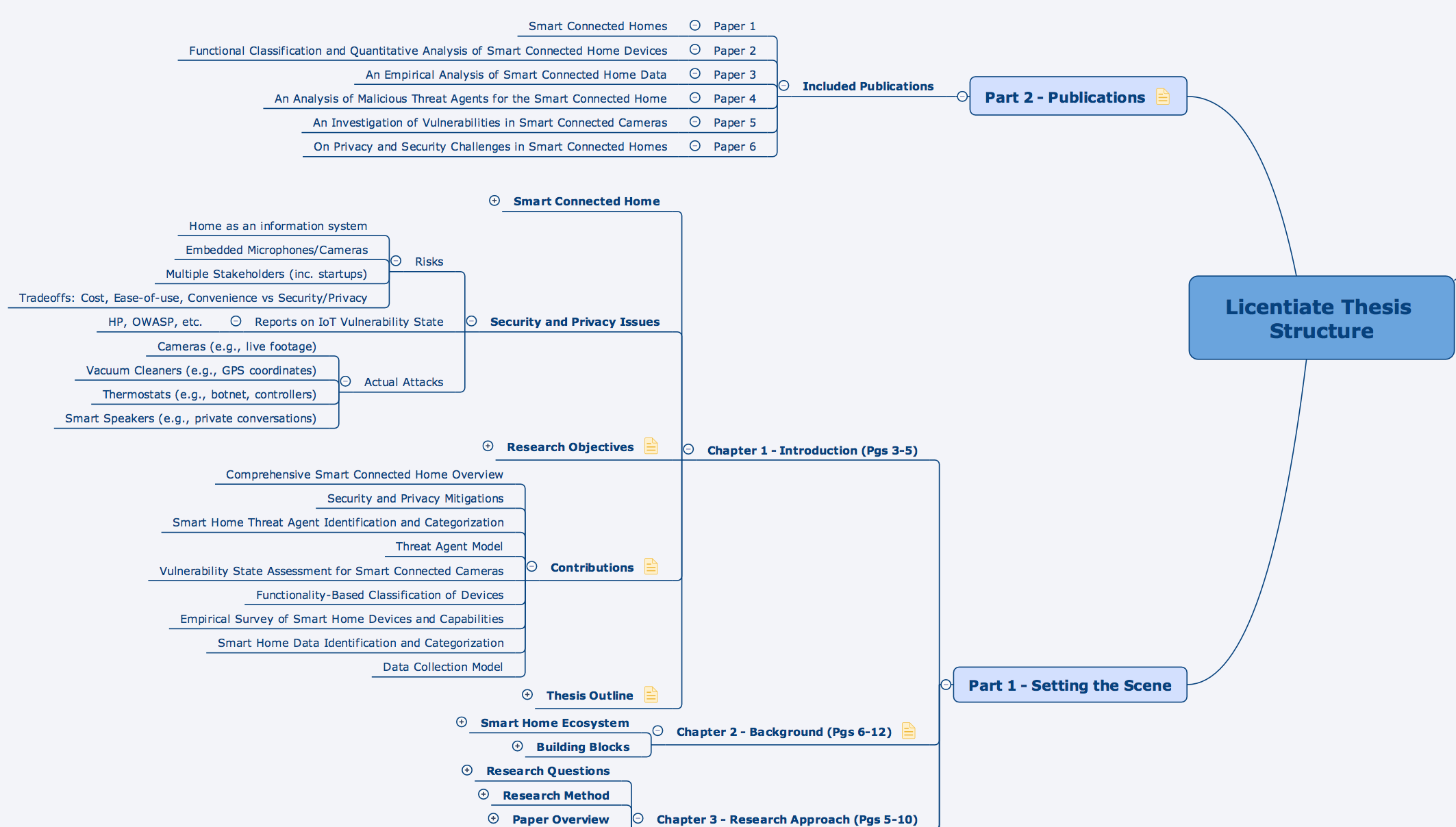
Take a look at the main structure of my licentiate hereunder and an expansion of it in the second diagram.

Screen Shot 2020-04-10 at 16.06.00

Mind map showing the main structure of my licentiate thesis.

Screen Shot 2020-04-10 at 16.08.45

Expanding the nodes of the mind map to show some of the concepts I have used for Part 1 and Part 2 of my thesis.

At the moment, I am also working on an idea for my journal article, and have already created a structure for that as a mind map. After I get the structure ready and approved by my coauthors, I can start working on the actual text. I would already know how the pieces would connect together in a cohesive structure and flow well if I follow the mind map in my writing.

Certainly, if you need help on how to create mind maps for your manuscript, course, talk, or for whatever reason you may have, feel free to get in touch.