Safeguarding the Future: My IoT Security Lecture at Lund University

Last Thursday, I had the honor of delivering an online lecture at Lund University, focusing on IoT security. The lecture addressed the core threats targeting IoT systems and the essential security measures to protect these devices from potential harm. In an increasingly interconnected world, the critical role of IoT security cannot be overstated.

As we continue to witness the exponential growth of IoT devices, it is crucial to prioritize security measures. The potential consequences of a security breach can be catastrophic, and we must remain vigilant in safeguarding our digital assets.

It is always a pleasure to share my expertise and insights on cybersecurity and IoT to guide the next-generation. I appreciate the opportunity and eagerly await what the future has in store.

Navigating the Risks and Rewards of Drone Technology

The use of drones for various applications has been on the rise in recent years. From delivery services to aerial photography, drones have proven to be a valuable tool for a variety of industries. However, the increased prevalence of drones has also raised concerns about security and safety. In high-security locations such as airports, the possibility of rogue drones posing a threat to the safety of passengers and personnel has led to the development of counter-drone technologies. One such technology that has gained attention in recent years is the use of drones to take down other drones. See the video here:

Video source: https://twitter.com/HowThingsWork_/status/1611069508201943055

The use of drones as a means of warfare has been a controversial topic for some time now. Military drones, also known as unmanned aerial vehicles, have been used by various countries for surveillance, intelligence gathering, and targeted airstrikes. While drones can provide an advantage in certain situations, their use has also raised ethical and legal issues, particularly with regard to civilian casualties.

The use of drones for warfare is not limited to military applications. Non-state actors have also been known to use drones for hostile purposes, such as smuggling drugs and weapons across borders or carrying out attacks. In some cases, these drones have been used to disrupt critical infrastructure, such as oil facilities and power plants. The use of drones as a means of warfare is likely to increase in the future, as the technology becomes more widespread and sophisticated. As such, the development of counter-drone technologies will become increasingly important in order to protect against these threats.

Explore the Future of Smart Home Technology with Amazon’s Dream Home

Photo by Jessica Lewis Creative on Pexels.com

From Amazon’s Echo to its Ring doorbell, the tech giant has made its way into many of our homes. But do you know what Amazon is learning about you and your family? From its smart gadgets, services, and data collection, Amazon has the potential to build a detailed profile of its users.

The data collected by Amazon can help power an “ambient intelligence” to make our home smarter, but it can also be a surveillance nightmare. Amazon may not “sell” our data to third parties, but it can use it to gain insights into our buying habits and more.

We must all decide how much of our lives we’re comfortable with Big Tech tracking us. Read the story authored by Geoffrey A. Fowler here to explore ways in which Amazon and potentially other Big Tech companies are watching us.

If you want to learn more about cyber security and smart homes, don’t hesitate to get in touch with me! I’m always happy to answer any questions and always look for collaboration opportunities.

The Matter Smart Home Standard

Photo by John Tekeridis on Pexels.com

Matter is a royalty-free smart home standard that promotes platform and device interoperability. Built on the Internet Protocol, Matter enables communication across smart home devices and ecosystems over a variety of IP-based networking technologies, such as Thread, Wi-Fi, and Ethernet.

The persistent need for an Internet connection experienced by modern IoT devices is likewise addressed by the Matter smart home standard. Indeed, Matter products run locally and do not rely on an Internet connection, although the standard is designed to readily communicate with the cloud.

Security is a fundamental premise of Matter. Matter functional security includes the following five characteristics:

  • Comprehensive – Matter is an open-source framework designed to provide comprehensive security with a layered approach that includes authentication, attestation, message protection and firmware updates, relying solely on its own security features and not on external communication protocols.
  • Strong – Matter implements a variety of security techniques, including a cryptosuite based on AES, SHA-256, and ECC, as well as passcode-based session and certificate-based establishment protocols. It also adopts device attestation and the CSA Distributed Compliance Ledger to guarantee a compliant and interoperable ecosystem.
  • Easy to use – Matter security is a smart device platform designed to make the implementation and use of smart devices much easier for device makers and consumers alike. It comes with open source reference implementations and well-defined security assets, making it a secure and simple solution for customers.
  • Resilient – Matter security is designed to protect, detect, and recover data, utilizing multiple protocols and measures to prevent denial of service attacks and provide resilience even when sleeping devices are involved.
  • Agile – Matter is a crypto-flexible protocol that abstracts cryptographic primitives, enabling the specification to be quickly changed or upgraded in response to new security threats. The modular design also allows for individual protocols to be replaced without completely overhauling the whole system.

Matter is paving the way for a secure and reliable connected home of the future. With its comprehensive security and ability to operate without an Internet connection, Matter is the ideal choice for modern IoT devices. It is revolutionizing the way home devices communicate, providing a safe and secure environment for the connected home of the future.

Read more here: https://csa-iot.org/wp-content/uploads/2022/03/Matter_Security_and_Privacy_WP_March-2022.pdf and https://csa-iot.org/all-solutions/matter/

IoT Security: A Guest Lecture at Malmö University

Today, I delivered a guest lecture in a Master’s course at Malmö University. The lecture that I gave was on the topic of IoT Security. In my lecture, I talked about the IoT, the importance of IoT security, and the different ways that IoT devices can be attacked and secured. I also discussed the challenges that the IoT poses to security and how we can address them.

After the lecture, I had an interesting discussion with some of the students about the topic of IoT security in which we especially talked about the importance of keeping our devices updated.

Overall, it was a good experience, and I am glad that I was able to share my knowledge with the students. I am always happy to help out and answer any questions that the students may have.

The Importance of Trustworthiness in the Age of the IoT: My First Article on Medium

There are many definitions of trustworthiness, but in general it can be described as the ability of a system to meet its objectives while adhering to a set of principles or guidelines. In the context of the IoT, the term “trustworthiness” is often used to refer to the ability of IoT devices and systems to accurately and reliably collect and communicate data.

If you would like to learn more about trustworthiness in the IoT, I suggest reading my latest article on Medium. In the article, I discuss the importance of trustworthiness in the age of the IoT. I also describe trustworthiness and explain why it is important for devices in the IoT. Moreover, I discuss some of the factors that contribute to trustworthiness in the IoT, including reliability, security, and transparency. Finally, I offer some tips on how individuals can ensure that their IoT devices and data are trustworthy.

I Had a Great Time at the WEBIST 2022 Conference

I had a wonderful time at the WEBIST 2022 conference in Malta, where I presented my research article titled “A Data-Centric Anomaly-Based Detection System for Interactive Machine Learning Setups“.

My presentation was on Thursday, October 27th, and it went really well. My audience was engaged throughout, and they asked some great questions at the end. I think they appreciated hearing about my approach to anomaly detection in interactive machine learning setups that include regular people interacting with IoT sensors for online learning purposes—which is an area that has not received much attention so far. With the help of supervised machine learning techniques, data poisoning attacks and potentially zero-day attacks can be detected with high-accuracy without requiring any hard-coded rules.

I was also honored to be selected as session chair for the Internet Technology track. The conference ran smoothly thanks to everyone’s efforts, and I am very thankful to have been chosen as chair.

I would like to thank all the organizers for a very well-organized event and the other participants for making it such a productive one.

I am looking forward to attending future WEBIST conferences and continuing to build my network.

Cybersecurity and the IoT: A Guest Lecture at Lund University

Today, I was invited to give a two-hour guest lecture about cybersecurity and the IoT to Lund University students. I introduced students to some state-of-the-art attacks that target IoT devices, networks, and services.

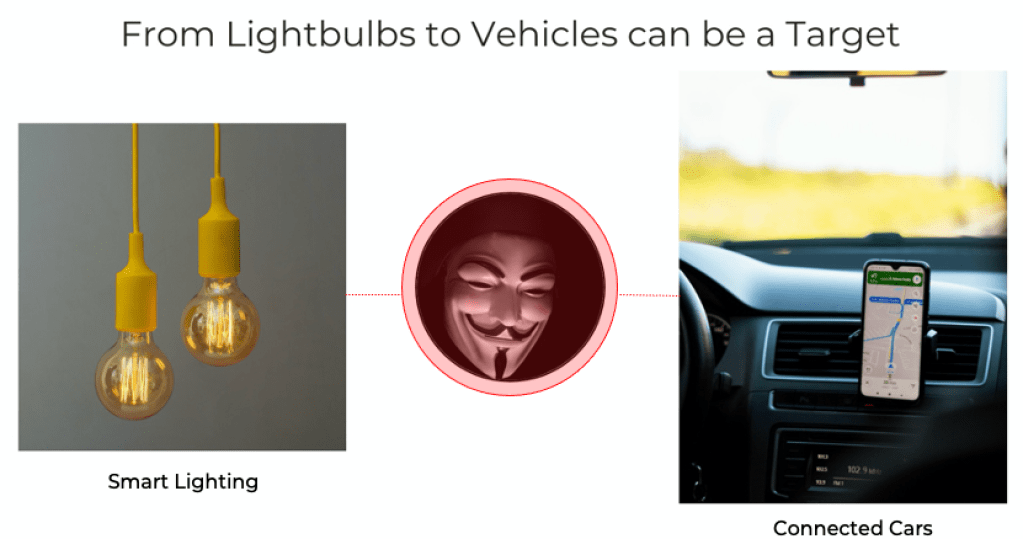
Everything can be a target when connected to the Internet, from a benign-looking device like a smart light bulb to a sophisticated system such as an electric car. Most of these things (which are often called smart objects) tend to be connected to public clouds, making them prone to remote attacks, ranging from misconfiguration to hijacking of accounts to malicious insiders, and more.

I also highlighted that it appears to be a growing trend that fewer vulnerabilities are being reported by various nations than before, specifically fewer vulnerabilities being reported by China. This could suggest that certain nations are covertly stockpiling vulnerabilities in order to strategically exploit them, perhaps for espionage purposes, but also for more nefarious purposes.

Anyway, in case you want to learn more about cyber security and the IoT, you are welcome to get in touch.

The future of luxury living is here, and it is floating

Ocean Builders has just unveiled its fleet of revolutionary living pods, which bring together luxury living and smart home technology. The pods are currently under construction in the Linton Bay Marina on the north coast of Panama and are described as the “world’s first eco-restorative homes”.

Some things, like food and medication, may be delivered by drones, while an autonomous vessel may be utilized as an ocean recycling vessel to collect waste and maintain a clean environment. The pods will also be equipped with special “smart rings” that enable residents to unlock doors and switch their music on at the wave of a hand.

Would you be interested in owning one of these homes? Do you think these homes are better equipped to safeguard our privacy and security? 

See the original article published on CNN Travel here: https://www.cnn.com/travel/article/eco-friendly-futuristic-floating-homes-under-construction/index.html

Popular smart home brands may be allowing the police to conduct warrantless home surveillance

The security cameras in our smart homes from well-known smart home brands like Amazon and Google might not just be watching over our pets. According to an article in The Verge, they can also aid law enforcement in their investigations of crimes, but only if we do not mind the police viewing our footage without a warrant.

That implies that the police can access our private information without first presenting proof that an emergency situation exists. Police will probably only make use of this access for lawful objectives, such as preventing crime or attempting to locate a missing person in need of assistance. However, it does raise some issues regarding what may transpire when this technology becomes even more widely used and available.

What if, for instance, this access is utilized to locate and detain activists or protestors who have not breached any laws? Citizens may only exercise caution when shopping, be aware that their smart device may record personal information, and, if possible, enable end-to-end encryption.

If you have any questions about how to secure your smart home, do not hesitate to contact me.