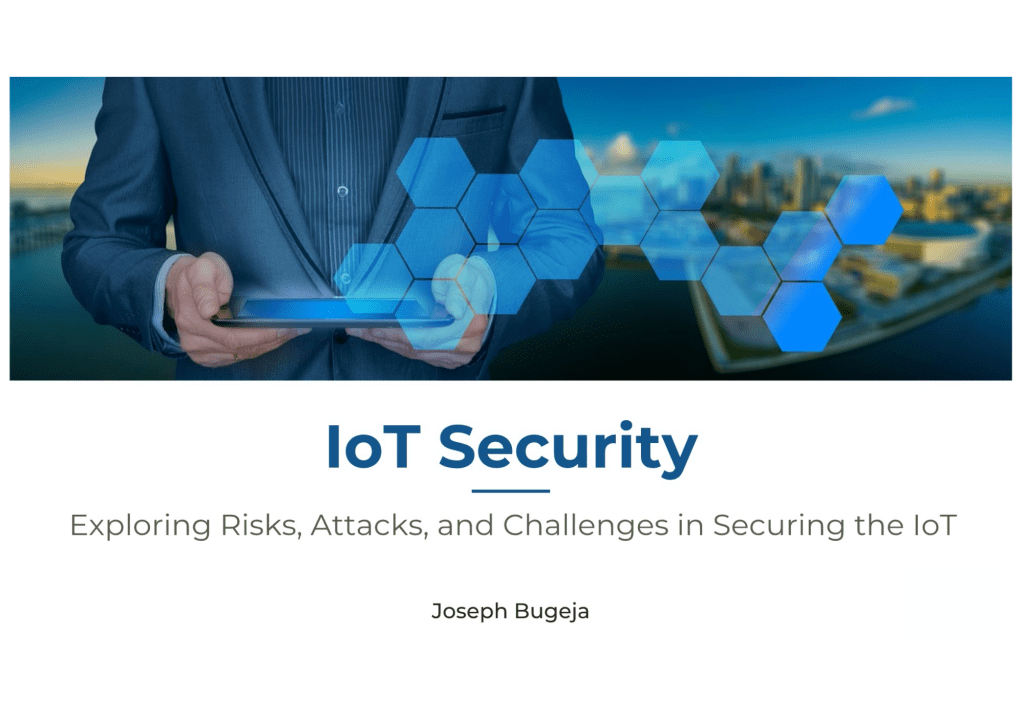
Last Thursday, I had the honor of delivering an online lecture at Lund University, focusing on IoT security. The lecture addressed the core threats targeting IoT systems and the essential security measures to protect these devices from potential harm. In an increasingly interconnected world, the critical role of IoT security cannot be overstated.
As we continue to witness the exponential growth of IoT devices, it is crucial to prioritize security measures. The potential consequences of a security breach can be catastrophic, and we must remain vigilant in safeguarding our digital assets.
It is always a pleasure to share my expertise and insights on cybersecurity and IoT to guide the next-generation. I appreciate the opportunity and eagerly await what the future has in store.
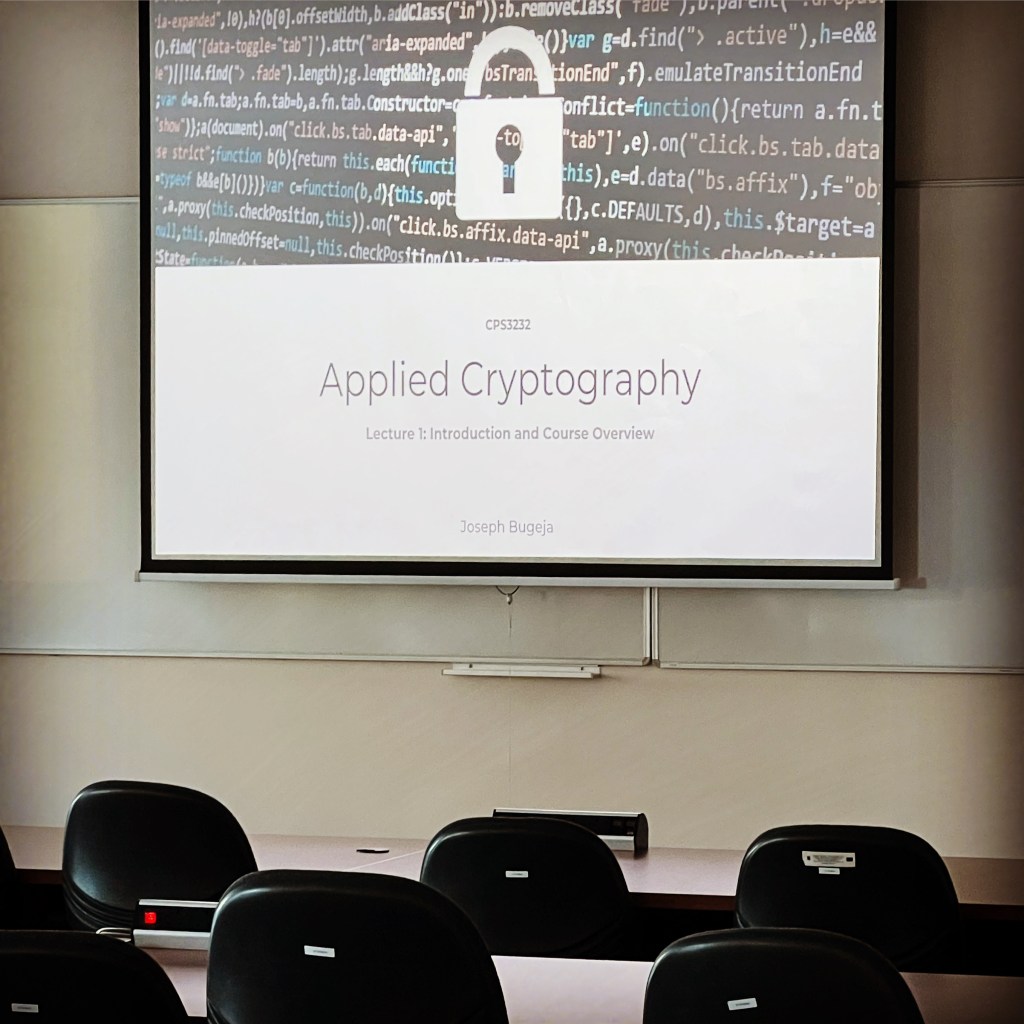
Snapshot of the title slide captured prior to the lesson.
I initiated the Applied Cryptography course at the University of Malta on Monday evening. As a cyber security professional and academic with a strong commitment to the field of information security, I am genuinely excited to be leading this specialized academic course this year.
Throughout the introductory lecture, I delved into the foundational concepts of cryptology, emphasizing its profound relevance within contemporary security applications. The pedagogical discourse traversed a diverse spectrum of topics, encompassing cryptographic mechanisms, the examination of classical substitution ciphers and their formal representations, a concise introduction to cryptanalysis, and more.
I am excited to be a part of this journey and look forward to the next lecture in this course on Monday!
As technology continues to advance, so do the risks and threats associated with it. To protect ourselves and our institutions, it is crucial to remain informed and updated with the latest security trends and best practices. This was the main focus of my recent 45-minute security awareness session with the university technical staff.
In addition to discussing fundamental security measures, I also covered the latest threat actors and threats in the cyber security landscape affecting universities and public institutions. This included state-sponsored actors, cybercriminals, hacker-for-hire groups, and hacktivists. I emphasized the potential consequences of a cyber attack, which can be severe and damaging, such as financial losses, reputational harm, and legal liability.
One alarming statistic I shared was that according to estimates from Statista’s Cybersecurity Outlook, the global cost of cybercrime is expected to surge in the next five years, rising from $8.44 trillion in 2022 to $23.84 trillion by 2027. This underscores the importance of taking proactive steps to mitigate potential risks.
While technical measures are essential, we also discussed the human element of security, including social engineering tactics like phishing emails or pretexting phone calls. Information security starts and ends with all of us, and it is crucial that everyone takes responsibility for protecting sensitive information and assets.
As the world progresses, so too does the need for innovative research to support it. In many ways, research and teaching go hand-in-hand, with each feeding off the other to produce a well-rounded system of knowledge. In the field of cybersecurity, for example, teaching is essential to ensure that a new generation of workers is equipped with the skills they need to protect our online world. But research is also critical to staying ahead of the curve and developing new ways to combat the ever-evolving threats that target our digital lives.
The benefits of combining research and teaching are numerous. By keeping up with the latest advances in their field, teachers can ensure that their students are receiving the most up-to-date and relevant information. This helps to prepare students for the real world, where they will be expected to apply their knowledge to solve problems. Meanwhile, researchers can use their findings to inform their teaching, ensuring that the latest discoveries are passed on to the next generation.
But it is not just about staying up-to-date; research can also help to improve the quality of teaching. By constantly testing and refining their methods, researchers can develop more effective ways of imparting knowledge. This benefits not only the students who receive this improved teaching but also society as a whole, as a better-educated workforce is better equipped to meet the challenges of the 21st century.
It is clear, then, that research and teaching are two sides of the same coin. By working together, they can create a virtuous circle that benefits everyone involved.
Today, I delivered a guest lecture in a Master’s course at Malmö University. The lecture that I gave was on the topic of IoT Security. In my lecture, I talked about the IoT, the importance of IoT security, and the different ways that IoT devices can be attacked and secured. I also discussed the challenges that the IoT poses to security and how we can address them.
After the lecture, I had an interesting discussion with some of the students about the topic of IoT security in which we especially talked about the importance of keeping our devices updated.
Overall, it was a good experience, and I am glad that I was able to share my knowledge with the students. I am always happy to help out and answer any questions that the students may have.
I find the collection of resources from GoVanguard to be quite helpful for anyone interested in a career in cyber security, whether it be in academia or industry.
Specifically, the GoVanguard InfoSec Encyclopedia is an excellent resource for beginners and experienced professionals alike. It contains a wealth of information on various aspects of information security and is constantly being updated with new and improved content. If you are looking to get into the field of information security, or simply want to learn more about it, the GoVanguard InfoSec Encyclopedia may be a great place to start.
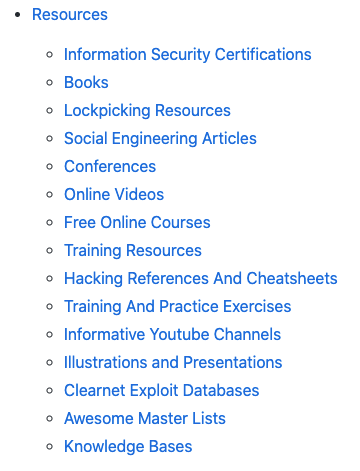
Here is a look at their resource list:
This repository also covers “OSINT Tools Used” and “Exploitation Enumeration and Data Recovery Tools” in addition to the aforementioned resources.
On Wednesday, August 18th, I attended the Teaching Apprenticeship conference at Blekinge University of Technology. The conference was held in a hybrid format, meaning that we could attend sessions both in person and remotely. The conference was informative, and I came away with a greater understanding of how to further improve my teaching.
The theme for this year’s conference was active academic teaching for pedagogical development. The goal of this theme is to increase awareness of educational quality and learning in higher education among educators, educational developers, librarians, and other people with an interest in the subject.
I really enjoyed the keynote given by Klara Bolander Laksov and Max Scheja, both professors of higher education pedagogy. They discussed the dimensions of academic teachership, the role of pedagogical leadership, and provided examples of what can be done at various levels of academic teachership. I also enjoyed learning more about blended learning from a theoretical perspective. New methods of learning—and new technology to support them—are necessary for students who will be entering the workforce in just a few short years.
A primary objective of higher education is to provide students with the ability to think independently and critically. The ability to use knowledge and skills with judgment, as well as demonstrate higher-level thinking skills, is essential in many academic disciplines. As teachers of students across Sweden and around the world, we must be willing to change our teaching styles and adapt to new methods and technologies to aid in fostering critical thinking in our students.
With an increasing number of companies providing consumers with their smart home products and related services, smart homes are quickly becoming the norm. This trend is likely to continue in the future, as more people are realizing the benefits of having a smart home.
Source: UR.se
Making a home smarter with sensing technologies can seem like a good idea, but it also gives attackers an opportunity to break into your devices and steal your personal data. This could be a problem for you and your family if you have smart devices in your home without having configured them properly or regularly updated them.
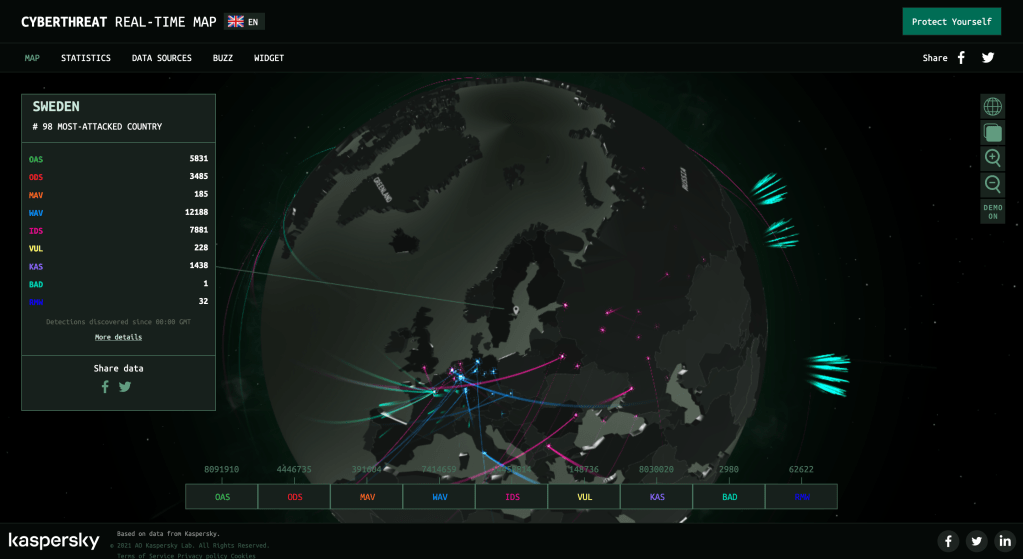
A cyber threat map, sometimes known as a cyber attack map, is a live map of current computer security attacks. These maps allow one to observe attacks as they pass through countries and continents. The majority of the cyber threat maps resemble video games, with colorful light beams indicating attacks from one region of the world to another.
Cyber threat maps can be highly useful in examining past attacks in terms of locations, volumes, and patterns. They can also help someone who is just starting out in their studies to acquire a sense of what is involved in the intricate world of cybersecurity. Last week, I had my introductory lecture on cyber security at Malmö University. I used cyber threat maps in my lecture to help raise awareness of how prevalent cyber security attacks are.
Kaspersky Cyberthreat Real-Time Map
Here are three of my favorite cyber threat maps (listed in no particular order):
We live in a world where even brushing our teeth can constitute the transmission of data to servers across the world. One day, we will sleep with smart pillows that will be able to detect our stress levels and send them to an app on our phone. We already wear fitness trackers all day, every day. What does this mean for our privacy? This is what I talked about during my 2-hour guest lecture at Malmö University on December 15.
The Internet of Things (IoT) is all around us, and with it comes an increased risk of privacy and security breaches. In the age of the IoT, we must be cautious about the information we make available to the public or share with shops and manufacturers. We must also consider how businesses may exploit personal data to discriminate against us or charge us extra since they have more knowledge about us thanks to these devices.
Please feel free to get in touch if you need any information about privacy, security, or related topics.



 Joseph Bugeja