ResearchRabbit: Unveiling Scholarly Connections with AI

The ever-growing volume of scholarly publications necessitates innovative approaches to literature exploration. ResearchRabbit, a free online “citation-based literature mapping tool”, has emerged as a promising solution by leveraging citation network analysis and visualization maps. Users initiate the process by feeding the tool a select few seed publications relevant to their research topic. ResearchRabbit then analyzes the reference lists of these seed articles, employing a combination of citation networks and proprietary algorithms to identify similar publications.

These publication recommendations are presented as two distinct visualization maps: network view and timeline view. The network view allows users to explore connections between publications, pinpointing potentially valuable sources that traditional keyword-based searches might miss. Within the network view, users can further refine their exploration by filtering for earlier, later, or similar works based on citations and the tool’s algorithms. The timeline view offers a complementary perspective, plotting publications by year to illustrate the historical development of research within the field.

Exploring the Scholarly Landscape: Generative AI and Cyber security Literature with ResearchRabbit.

This visualization approach offers a distinct advantage over traditional search methods like when using Google Scholar. By visually depicting connections between publications and authors, ResearchRabbit empowers researchers to grasp the broader context of their field and identify seminal works that have shaped current research trends. While limitations exist, such as the initial learning curve associated with the tool’s various functionalities, ResearchRabbit offers a valuable addition to the modern researcher’s toolkit. This AI-powered tool can significantly streamline the literature review process and enhance research efficiency by fostering a deeper understanding of the scholarly landscape.

Bibliography:

Cole V, Boutet M. ResearchRabbit. J Can Health Libr Assoc. 2023 Aug 1;44(2):43–7. doi: 10.29173/jchla29699. PMCID: PMC10403115.


Realizing the Potential of Machine Learning with Python Libraries

Photo by Pixabay on Pexels.com

In the realm of data science, machine learning stands out as a powerful approach to problem-solving by harnessing the potential of data. Unlike traditional programming, where solutions are explicitly defined, machine learning involves enabling computers to learn and find solutions autonomously. This article will focus on the pivotal role of machine learning libraries in Python, highlighting their significance in creating and training machine learning models for a variety of applications.

Python offers a plethora of libraries dedicated to machine learning, each with its own unique strengths and capabilities. These libraries have been instrumental in shaping my journey as a researcher, enabling me to unlock valuable insights and make data-driven decisions. Alongside a team of skilled researchers, I have had the privilege of utilizing various libraries, with Scikit-learn playing a particularly vital role in our work.

Scikit-learn, built on top of the powerful NumPy and SciPy libraries, has been an invaluable asset in our machine learning endeavors. Its vast collection of classes and functions provides a solid foundation for implementing traditional machine learning algorithms. From classification and regression to clustering and dimensionality reduction, Scikit-learn has been our go-to library for a wide range of tasks.

However, the power of machine learning extends beyond our research endeavors. As we explored earlier in our blog series, machine learning has proven to be an indispensable tool for threat hunting. By leveraging the capabilities of machine learning libraries, organizations can effectively detect and combat cyber threats, enhancing their security posture and safeguarding sensitive data.

Now, let us delve into some of the popular machine learning libraries that have significantly improved the field:

  1. TensorFlow: Renowned as a leading framework in deep learning, TensorFlow enables the resolution of intricate problems by defining data transformation layers and fine-tuning them iteratively. Its extensive ecosystem and diverse set of tools make it a preferred choice for constructing and training sophisticated deep learning models.
  2. PyTorch: Positioned as a robust and production-ready machine learning library that has garnered significant recognition, PyTorch excels in addressing complex deep learning challenges by harnessing the computational power of GPUs. Its dynamic computational graph and intuitive interface make PyTorch a preferred choice for flexible and efficient model development.
  3. Keras: Renowned for its user-friendly interface and high-level abstractions, Keras simplifies the development of neural networks. Its seamless integration with TensorFlow enables rapid prototyping and deployment of deep learning models.

These machine learning libraries—Scikit-learn, TensorFlow, Keras, and PyTorch—play an indispensable role in unlocking the predictive potential of data and driving innovation across diverse domains.

In summary, Python’s rich ecosystem of machine learning libraries are powerful tools for building, training, and deploying machine learning models. Through my own usage and exploration, I have found these libraries to be incredibly helpful, with Scikit-learn being particularly influential in my work. Furthermore, the impact of machine learning extends to critical domains such as threat hunting and cyber security, empowering organizations to proactively address emerging threats and safeguard their valuable assets.

Exploring the Frontier of Green Intelligent Homes: My Presentation in Prague

Photo by Capricious Wayfarer (Saptarshi) on Pexels.com

As we continue to embrace the benefits of smart technology, the concept of the Green Intelligent Home is an exciting and promising development in the evolution of smart homes. Our paper, which I presented at the IoTBDS conference in Prague last weekend, explores this frontier.

The possibilities of a world where Green Intelligent Homes are the norm are intriguing, as they offer increased automation, personalization, sustainability, and more. Nonetheless, as with any emerging technology, it is important to be aware of potential risks and implications. These range from security and privacy, manipulation of people, a lack of self-sufficiency, and more.    

As the Green Intelligent Home prospect continues to develop, it is essential to stay informed and explore the potential of this technology. In case you are interested in learning more about the Green Intelligent Home or collaborating on related projects, please get in touch.

Exploring Some Misconceptions and Complexities of Artificial Intelligence

Artificial intelligence (AI) is a rapidly advancing field that has the potential to revolutionize many aspects of our daily lives. However, as with any complex subject, there are often misunderstandings and misconceptions about what AI is and what it can do. In this article, we will explore some of these misconceptions.

The intersection of reasoning and learning in AI techniques. AI techniques can be broadly grouped into two categories based on their ability to reason and learn. However, these techniques are not mutually exclusive. For example, expert systems, which involve reasoning, may also incorporate elements of learning, such as the ability to adjust the rules or weightings based on past performance or feedback.

The versatility of machine learning. Machine learning is a technique that enables AI systems to learn how to solve problems that cannot be precisely specified or whose solution method cannot be described by symbolic reasoning rules. However, machine learning is not limited to solving these types of problems. It can also be used to learn from structured data and can be combined with symbolic reasoning techniques to achieve a wider range of capabilities. 

The diversity of machine learning techniques. Machine learning definitions and sometimes taxonomies only mention supervised, unsupervised, and reinforcement learning. However, there are other types of machine learning, such as semi-supervised learning and active learning.  These different types of machine learning each have their own unique characteristics and are suited to different types of problems and data.

The relationship between AI and robotics. AI and robotics are closely related fields that often overlap, but they are distinct areas of study. While robotics can be considered a subfield of AI, it is possible to study robotics independently of AI. Similarly, AI can be studied without necessarily delving into the field of robotics. 

In conclusion, the field of AI is vast and complex, with many nuances and misconceptions that are important to understand. Despite these complexities, the potential for AI to revolutionize many aspects of our lives makes it a field worth exploring and understanding.

Advantages and Concerns of Using Machine Learning in Security Systems

Photo by Pixabay on Pexels.com

Machine learning (ML) has revolutionized the security market in recent years, providing organizations with advanced solutions for detecting and preventing security threats. ML algorithms are able to analyze large amounts of data and identify patterns and trends that may not be immediately apparent to human analysts. This has led to the development of numerous ML-based security systems, such as intrusion detection systems, malware detection systems, and facial recognition systems.

ML-based security systems have several advantages over traditional security systems. One of the main advantages is their ability to adapt and learn from new data, making them more effective over time. Traditional security systems rely on predetermined rules and protocols to detect threats, which can become outdated and ineffective as new threats emerge. In contrast, ML-based systems are able to continuously learn and improve their performance as they process more data. This makes them more effective at detecting and responding to new and evolving threats.

Another advantage of ML-based security systems is their ability to process large amounts of data in real time. This enables them to identify threats more quickly and accurately than human analysts, who may not have the time or resources to manually review all of the data. This makes ML-based systems more efficient and effective at detecting security threats.

Despite the numerous benefits of ML-based security systems, there are also some concerns that need to be addressed. One concern is the potential for bias in the data used to train ML algorithms. If the data used to train the algorithm is biased, the algorithm itself may be biased and produce inaccurate results. This can have serious consequences in the security context, as biased algorithms may overlook or wrongly flag certain threats. To mitigate this risk, it is important to ensure that the data used to train ML algorithms is representative and diverse and to regularly monitor and test the performance of the algorithms to identify and address any biases.

Another concern with ML-based security systems is that they are only as good as the data they are trained on. If the training data is incomplete or outdated, the system may not be able to accurately identify threats. This highlights the importance of maintaining high-quality and up-to-date training data for ML-based security systems.

Despite these concerns, the use of ML in security systems is likely to continue to grow in the coming years. As more organizations adopt ML-based security systems, it will be important to ensure that these systems are trained on high-quality data and are continuously monitored to ensure that they are performing accurately. This will require ongoing investment in data management and monitoring infrastructure, as well as the development of best practices for training and maintaining ML-based security systems.

Recently, I published an article on this topic. Take a look at it here: https://www.scitepress.org/Link.aspx?doi=10.5220/0011560100003318

Please get in touch with me if you want to discuss themes related to cyber security, information privacy, and trustworthiness, or if you want to collaborate on research or joint projects in these areas.

Unveiling the Lack of Transparency in AI Research

Photo by FOX on Pexels.com

A recent systematic review by Burak Kocak MD et al. has revealed a lack of transparency in AI research. The data, presented in Academic Radiology, showed that only 18% of the 194 selected radiology and nuclear medicine studies included in the analysis had raw data available, with access to private data in only one paper. Additionally, just one-tenth of the selected papers shared the pre-modeling, modeling, or post-modeling files.

The authors of the study attributed this lack of availability mainly to the regulatory hurdles that need to be overcome in order to address privacy concerns. The authors suggested that manuscript authors, peer-reviewers, and journal editors could help make AI studies more reproducible in the future by being conscious of transparency and data/code availability when publishing research results.

The findings of the study highlight the importance of transparency in AI research. Without access to data and code, it is difficult to validate and replicate results, leading to a lack of trust in the results. This is especially important for medical AI research, as the safety and efficacy of treatments and diagnostics depend on accurate and reliable results. What further steps can be taken to increase transparency while still protecting privacy?

8 Rules for Good Research Practice

Photo by Lukas on Pexels.com

As a researcher, it is important to understand good research practices and to make sure to adhere to them. This article will delve into each of the eight rules proposed by the Swedish Research Council (Vetenskapsrådet, 2017) for good research practice and provide examples of how to apply them in your own research.

  • 1. To tell the truth about one’s research. This means being honest and open about the methods and results of your research. It also means not making false claims or manipulating data to fit a desired outcome. To ensure that your research is truthful, make sure to accurately record your data and to clearly explain any methods or results that are not obvious. It is also important to keep an open mind when conducting research; be willing to question your own assumptions and consider alternative explanations.
  • 2. To consciously review and report the basic premises of one’s studies. When conducting research, it is important to be aware of the assumptions and premises of your work. Make sure to clearly explain why you are conducting the research, what results in you expect, and how the research will be used. This will help to ensure that the research is conducted in a sound and ethical manner.
  • 3. To openly account for one’s methods and results. When conducting research, it is important to clearly explain the methods and results that were used in the study. This includes explaining the rationale behind the methods, the results that were obtained, and any limitations or weaknesses that were encountered. Doing so will help to make sure that the research is conducted in an ethical manner and that the results are accurate and meaningful.
  • 4. To openly account for one’s commercial interests and other associations. When conducting research, it is important to be aware of any financial or other interests that may affect the results of the study. Make sure to disclose any potential conflicts of interest, such as funding sources, collaborations, or affiliations. This will help to ensure that the research is conducted in an ethical manner and that the results are unbiased.
  • 5. To not make unauthorized use of the research results of others. When conducting research, it is important to respect the intellectual property of others. Make sure to properly cite any sources that you use and to get permission before using the research results of others. Doing so will help to ensure that you are not infringing on the rights of others and will help to protect your own work from potential misuse.
  • 6. To keep one’s research organized, for example, through documentation and filing. When conducting research, it is important to keep track of the data and results that you obtain. Make sure to keep accurate records and to store data in a secure manner. Doing so will help to ensure that the research is conducted in an orderly and ethical manner and will help to protect the integrity of the research.
  • 7. Striving to conduct one’s research without doing harm to people, animals, or the environment. When conducting research, it is important to be aware of the potential consequences of the study. Make sure to consider any ethical implications of the research and to take necessary steps to minimize any potential risks or harms. This will help to ensure that the research is conducted ethically and with respect for the rights of participants, animals, and the environment.
  • 8. To be fair in one’s judgement of others’ research. When conducting research, it is important to be aware of the potential biases that may influence one’s judgement. Make sure to consider the context of the research and to keep an open mind when evaluating the work of others. Doing so will help to ensure that your own research is conducted in an ethical manner and that the results are reliable.

In conclusion, it is important for researchers to be aware of and adhere to the ethical guidelines and principles of good research practice. By understanding and following these eight rules proposed by the Swedish Research Council, researchers can ensure that their work is conducted in an ethical and responsible manner.

The Importance of Combining Research and Teaching

Photo by cottonbro studio on Pexels.com

As the world progresses, so too does the need for innovative research to support it. In many ways, research and teaching go hand-in-hand, with each feeding off the other to produce a well-rounded system of knowledge. In the field of cybersecurity, for example, teaching is essential to ensure that a new generation of workers is equipped with the skills they need to protect our online world. But research is also critical to staying ahead of the curve and developing new ways to combat the ever-evolving threats that target our digital lives.

The benefits of combining research and teaching are numerous. By keeping up with the latest advances in their field, teachers can ensure that their students are receiving the most up-to-date and relevant information. This helps to prepare students for the real world, where they will be expected to apply their knowledge to solve problems. Meanwhile, researchers can use their findings to inform their teaching, ensuring that the latest discoveries are passed on to the next generation.

But it is not just about staying up-to-date; research can also help to improve the quality of teaching. By constantly testing and refining their methods, researchers can develop more effective ways of imparting knowledge. This benefits not only the students who receive this improved teaching but also society as a whole, as a better-educated workforce is better equipped to meet the challenges of the 21st century.

It is clear, then, that research and teaching are two sides of the same coin. By working together, they can create a virtuous circle that benefits everyone involved.

A Great Resource to Help you Learn about Cybersecurity

I find the collection of resources from GoVanguard to be quite helpful for anyone interested in a career in cyber security, whether it be in academia or industry.

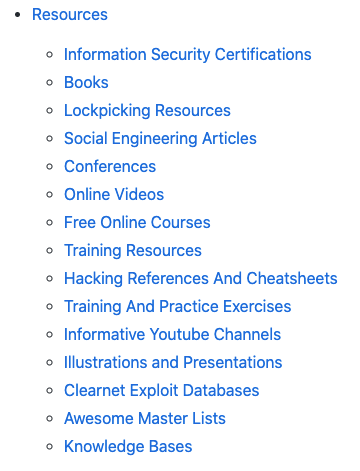
Specifically, the GoVanguard InfoSec Encyclopedia is an excellent resource for beginners and experienced professionals alike. It contains a wealth of information on various aspects of information security and is constantly being updated with new and improved content. If you are looking to get into the field of information security, or simply want to learn more about it, the GoVanguard InfoSec Encyclopedia may be a great place to start.

Here is a look at their resource list:

This repository also covers “OSINT Tools Used” and “Exploitation Enumeration and Data Recovery Tools” in addition to the aforementioned resources.

How To Achieve Flow When Writing A Research Paper

When working on your Ph.D., it is imperative to maintain a state of flow. Maintaining a state of flow will give you more motivation towards achieving your goals and finishing work in a timely manner. In addition, maintaining a state of flow will help keep you from getting distracted by less important tasks that are not related to your work, such as checking Instagram, TikTok, Twitter, and other social media platforms.

As Mihaly Csikszentmihalyi asserts in his book “Flow: The Psychology of Optimal Experience”, flow is “the state in which people are so involved in an activity that nothing else seems to matter; the experience itself is so enjoyable that people will do it even at great cost, for the sheer sake of doing it”. Flow is a state in which you are so focused on your work that all other distractions fade away. It is a state in which you are completely immersed in what you are doing, and it is very difficult to pull you out of it. Many Ph.D. students struggle with maintaining a state of flow in their research work. They want to work hard and do well, but they just cannot seem to find the motivation or energy needed to complete their projects. Here are four tips that might help you achieve flow:

Photo by Scott Graham on Unsplash

1)  If you want to be able to write effectively, then you need to set aside time each day for writing. This can be done by creating a schedule and sticking to it. The schedule needs to include the amount of time that you will be spending on your writing tasks each day, as well as any breaks that you plan on taking during the day.

2) Before sitting down, make sure you have everything ready — your notes/laptop/pencils/paper/etc. — so that when it comes time to work on something important, there are no delays caused by having to look for something else first, rather than just getting started right away without any more delays than necessary.

3) Disable any notifications from social media platforms including televisions and phones so that they do not distract you while working on your project. You can always check these platforms or media after completing your tasks for the day, but if they are distracting, then they should be turned off for better focus during working hours.

4) Take frequent breaks, but keep them short and to the point. Consider also using the Pomodoro Technique. The Pomodoro Technique is a time management technique where you work using 25-minute work sprints and then enjoy a 5-minute break.

It is just as important to maintain a state of flow as it is to establish one at the start of your work. The two things go hand in hand. However, maintaining flow can be more difficult at times because some things that interrupt flow are not always avoidable. In order to stay on top of your Ph.D. while maintaining a state of flow, you need to be organized and efficient. By setting aside enough time each day for writing and making sure that you have everything ready before sitting down to work, you will be able to focus more fully on the task at hand, which should contribute towards maintaining a state of flow.