EU Data Initiatives: Developments to Watch in 2024 and Beyond

The European Union (EU) has been at the forefront of global efforts to protect privacy and personal data. Over the years, the EU has implemented several initiatives and regulations that aim to safeguard the privacy rights of its citizens. The International Association of Privacy Professionals (IAPP) has created a timeline of key dates for these EU regulations and initiatives, including those that are yet to be finalized.

Photo by freestocks.org on Pexels.com

Here are the key dates to watch out for the year 2024 and beyond:

  • February 17, 2024: The Digital Services Act (DSA), which aims to establish clear rules for online platforms and strengthen online consumer protection, will become applicable
  • Spring 2024: The AI Act is expected to be adopted
  • Mid-2024: The Data Act is expected to enter into force
  • October 18, 2024: The NIS2 directive will become applicable
  • January 17, 2025: The DORA regulation will become applicable

In conclusion, the EU’s data initiatives are set to undergo significant changes in the coming years with the implementation of regulations like the DSA, AI Act, Data Act, NIS2 directive, and DORA regulation. These initiatives aim to establish clear rules for online platforms, strengthen online consumer protection, facilitate data sharing, and more. It is crucial for organizations, including individuals, to stay up-to-date with these key dates to ensure compliance with the new regulations and to take advantage of the opportunities they present.

For a more detailed overview of the EU’s data initiatives and their key dates, check out the infographic created by the IAPP here.


Securing the University: My Information Security Awareness Session

Photo by ThisIsEngineering on Pexels.com

As technology continues to advance, so do the risks and threats associated with it. To protect ourselves and our institutions, it is crucial to remain informed and updated with the latest security trends and best practices. This was the main focus of my recent 45-minute security awareness session with the university technical staff.

In addition to discussing fundamental security measures, I also covered the latest threat actors and threats in the cyber security landscape affecting universities and public institutions. This included state-sponsored actors, cybercriminals, hacker-for-hire groups, and hacktivists. I emphasized the potential consequences of a cyber attack, which can be severe and damaging, such as financial losses, reputational harm, and legal liability.

One alarming statistic I shared was that according to estimates from Statista’s Cybersecurity Outlook, the global cost of cybercrime is expected to surge in the next five years, rising from $8.44 trillion in 2022 to $23.84 trillion by 2027. This underscores the importance of taking proactive steps to mitigate potential risks.

While technical measures are essential, we also discussed the human element of security, including social engineering tactics like phishing emails or pretexting phone calls. Information security starts and ends with all of us, and it is crucial that everyone takes responsibility for protecting sensitive information and assets.

Here is a redacted version of the presentation. Additionally, I recently co-authored an article titled “Human Factors for Cybersecurity Awareness in a Remote Work Environment”, which delves into relevant and relatable cyber security aspects for remote employees.”

Navigating the Risks and Rewards of Drone Technology

The use of drones for various applications has been on the rise in recent years. From delivery services to aerial photography, drones have proven to be a valuable tool for a variety of industries. However, the increased prevalence of drones has also raised concerns about security and safety. In high-security locations such as airports, the possibility of rogue drones posing a threat to the safety of passengers and personnel has led to the development of counter-drone technologies. One such technology that has gained attention in recent years is the use of drones to take down other drones. See the video here:

Video source: https://twitter.com/HowThingsWork_/status/1611069508201943055

The use of drones as a means of warfare has been a controversial topic for some time now. Military drones, also known as unmanned aerial vehicles, have been used by various countries for surveillance, intelligence gathering, and targeted airstrikes. While drones can provide an advantage in certain situations, their use has also raised ethical and legal issues, particularly with regard to civilian casualties.

The use of drones for warfare is not limited to military applications. Non-state actors have also been known to use drones for hostile purposes, such as smuggling drugs and weapons across borders or carrying out attacks. In some cases, these drones have been used to disrupt critical infrastructure, such as oil facilities and power plants. The use of drones as a means of warfare is likely to increase in the future, as the technology becomes more widespread and sophisticated. As such, the development of counter-drone technologies will become increasingly important in order to protect against these threats.

Understanding Cyber Warfare Through Frameworks

Photo by Joseph Fuller on Pexels.com

Cyber warfare is a rapidly evolving field, and various frameworks have been developed to better understand and defend against cyber attacks. Several cyber kill chains have been developed to explain what an attacker might do. The most commonly used at present are the Lockheed Martin Cyber Kill Chain and the MITRE ATT&CK framework.

The Lockheed Martin Cyber Kill Chain is a seven-stage framework that describes the steps an attacker might take in a cyber attack. It includes stages for reconnaissance, weaponization, delivery, exploitation, installation, command and control, and actions on objectives. 

The MITRE ATT&CK framework is a comprehensive database of tactics, techniques, and procedures used by attackers that is organized into several categories such as initial access, execution, persistence, privilege escalation, defense evasion, credential access, discovery, lateral movement, collection, command and control, and exfiltration.

The Unified Kill Chain is a framework that combines elements from the Lockheed Martin Cyber Kill Chain, the MITRE ATT&CK framework, and other frameworks to provide a more comprehensive view of cyber attacks.  It includes eighteen attack phases, which are the steps a cyberattack may progress through.

Overall, cyber warfare is highly complex and requires extensive knowledge and understanding of the different frameworks and best practices for defending against attacks. By familiarizing ourselves with these frameworks, we can better prepare ourselves for the challenges ahead and ensure our networks remain secure.

Exploring the Interdependencies between AI and Cybersecurity

Photo by Pixabay on Pexels.com

With the increasing prevalence of AI technology in our lives, it is important to understand the relationship between AI and cybersecurity. This relationship is complex, with a range of interdependencies between AI and cybersecurity. From the cybersecurity of AI systems to the use of AI in bolstering cyber defenses, and even the malicious use of AI, there are a number of different dimensions to explore.

  • Protecting AI Systems from Cyber Threats: As AI is increasingly used in a variety of applications, the security of the AI technology and its systems is paramount. This includes the implementation of measures such as data encryption, authentication protocols, and access control to ensure the safety and integrity of AI systems.
  • Using AI to Support Cybersecurity: AI-based technologies are being used to detect cyber threats and anomalies that may not be detected by traditional security tools. AI-powered security tools are being developed to analyze data and detect malicious activities, such as malware and phishing attacks.
  • AI-Facilitated Cybercrime: AI-powered tools can be used in malicious ways, from deepfakes used to spread misinformation to botnets used to launch DDoS attacks. The potential for malicious use of AI is a major concern for cybersecurity professionals.

In conclusion, AI and cybersecurity have a multi-dimensional relationship with a number of interdependencies. AI is being used to bolster cybersecurity, while at the same time it is being used for malicious activities. Cybersecurity professionals must be aware of the potential for malicious use of AI and ensure that the security of AI systems is maintained.

The Matter Smart Home Standard

Photo by John Tekeridis on Pexels.com

Matter is a royalty-free smart home standard that promotes platform and device interoperability. Built on the Internet Protocol, Matter enables communication across smart home devices and ecosystems over a variety of IP-based networking technologies, such as Thread, Wi-Fi, and Ethernet.

The persistent need for an Internet connection experienced by modern IoT devices is likewise addressed by the Matter smart home standard. Indeed, Matter products run locally and do not rely on an Internet connection, although the standard is designed to readily communicate with the cloud.

Security is a fundamental premise of Matter. Matter functional security includes the following five characteristics:

  • Comprehensive – Matter is an open-source framework designed to provide comprehensive security with a layered approach that includes authentication, attestation, message protection and firmware updates, relying solely on its own security features and not on external communication protocols.
  • Strong – Matter implements a variety of security techniques, including a cryptosuite based on AES, SHA-256, and ECC, as well as passcode-based session and certificate-based establishment protocols. It also adopts device attestation and the CSA Distributed Compliance Ledger to guarantee a compliant and interoperable ecosystem.
  • Easy to use – Matter security is a smart device platform designed to make the implementation and use of smart devices much easier for device makers and consumers alike. It comes with open source reference implementations and well-defined security assets, making it a secure and simple solution for customers.
  • Resilient – Matter security is designed to protect, detect, and recover data, utilizing multiple protocols and measures to prevent denial of service attacks and provide resilience even when sleeping devices are involved.
  • Agile – Matter is a crypto-flexible protocol that abstracts cryptographic primitives, enabling the specification to be quickly changed or upgraded in response to new security threats. The modular design also allows for individual protocols to be replaced without completely overhauling the whole system.

Matter is paving the way for a secure and reliable connected home of the future. With its comprehensive security and ability to operate without an Internet connection, Matter is the ideal choice for modern IoT devices. It is revolutionizing the way home devices communicate, providing a safe and secure environment for the connected home of the future.

Read more here: https://csa-iot.org/wp-content/uploads/2022/03/Matter_Security_and_Privacy_WP_March-2022.pdf and https://csa-iot.org/all-solutions/matter/

IoT Security: A Guest Lecture at Malmö University

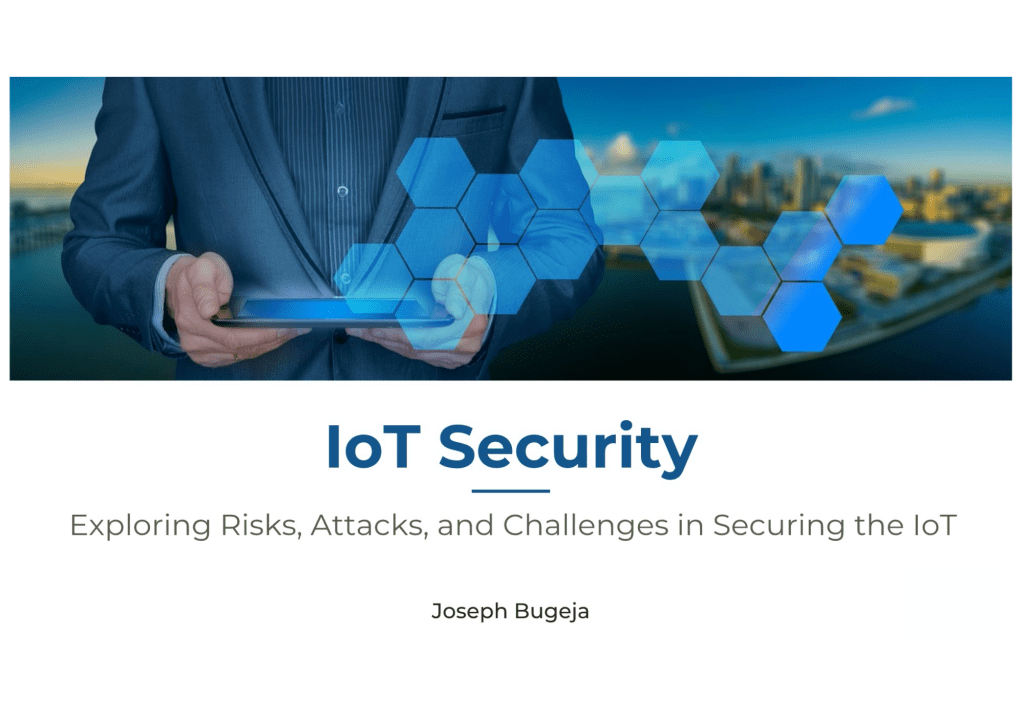
Today, I delivered a guest lecture in a Master’s course at Malmö University. The lecture that I gave was on the topic of IoT Security. In my lecture, I talked about the IoT, the importance of IoT security, and the different ways that IoT devices can be attacked and secured. I also discussed the challenges that the IoT poses to security and how we can address them.

After the lecture, I had an interesting discussion with some of the students about the topic of IoT security in which we especially talked about the importance of keeping our devices updated.

Overall, it was a good experience, and I am glad that I was able to share my knowledge with the students. I am always happy to help out and answer any questions that the students may have.

The Importance of Trustworthiness in the Age of the IoT: My First Article on Medium

There are many definitions of trustworthiness, but in general it can be described as the ability of a system to meet its objectives while adhering to a set of principles or guidelines. In the context of the IoT, the term “trustworthiness” is often used to refer to the ability of IoT devices and systems to accurately and reliably collect and communicate data.

If you would like to learn more about trustworthiness in the IoT, I suggest reading my latest article on Medium. In the article, I discuss the importance of trustworthiness in the age of the IoT. I also describe trustworthiness and explain why it is important for devices in the IoT. Moreover, I discuss some of the factors that contribute to trustworthiness in the IoT, including reliability, security, and transparency. Finally, I offer some tips on how individuals can ensure that their IoT devices and data are trustworthy.

A Great Resource to Help you Learn about Cybersecurity

I find the collection of resources from GoVanguard to be quite helpful for anyone interested in a career in cyber security, whether it be in academia or industry.

Specifically, the GoVanguard InfoSec Encyclopedia is an excellent resource for beginners and experienced professionals alike. It contains a wealth of information on various aspects of information security and is constantly being updated with new and improved content. If you are looking to get into the field of information security, or simply want to learn more about it, the GoVanguard InfoSec Encyclopedia may be a great place to start.

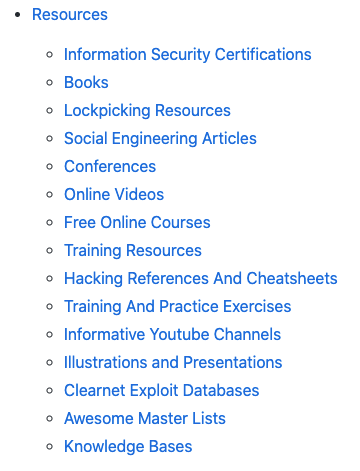
Here is a look at their resource list:

This repository also covers “OSINT Tools Used” and “Exploitation Enumeration and Data Recovery Tools” in addition to the aforementioned resources.

The Different Types of Privacy-Preserving Schemes

Machine learning (ML) is a subset of artificial intelligence (AI) that provides systems the ability to automatically improve and learn from experience without explicit programming. ML has led to important advancements in a number of academic fields, including robotics, healthcare, natural language processing, and many more. With the ever-growing concerns over data privacy, there has been an increasing interest in privacy-preserving ML. In order to protect the privacy of data while still allowing it to be used for ML, various privacy-preserving schemes have been proposed. Here are some of the main schemes:

Secure multiparty computation (SMC) is a type of privacy-preserving scheme that allows multiple parties to jointly compute a function over their data while keeping their data private. This is achieved by splitting the data up among the parties and having each party perform a computation on their own data. The results of the computations are then combined to obtain the final result.

Homomorphic encryption (HE) is a type of encryption that allows computations to be performed on encrypted data. This type of encryption preserves the structure of the data, which means that the results of the computations are the same as if they had been performed on unencrypted data. HE can be used to protect the privacy of data while still allowing computations to be performed on that data.

Differential privacy (DP) is a type of privacy preservation that adds noise to the data in order to mask any individual information. This noise is added in a way that it does not affect the overall results of the data. This noise can be added in a variety of ways, but the most common is through the Laplace mechanism. DP is useful for preserving privacy because it makes it difficult to determine any individual’s information from the dataset. 

Gradient masking is a technique that is used to prevent sensitive information from being leaked through the gradients of an ML model – the gradients are the partial derivatives of the loss function with respect to the model parameters. This is done by adding noise to the gradients in order to make them more difficult to interpret. This is useful for privacy preservation because it makes it more difficult to determine the underlying data from the gradients.

Security enclaves (SE) are hardware or software environments that are designed to be secure from tampering or interference. They are often used to store or process sensitive data, such as cryptographic keys, in a way that is isolated from the rest of the system. 

There are many ways to preserve privacy when working with ML models, each with their own trade-offs. In this article, we summarised five of these methods. All of these methods have strengths and weaknesses, so it is important to choose the right one for the specific application.