I find the collection of resources from GoVanguard to be quite helpful for anyone interested in a career in cyber security, whether it be in academia or industry.
Specifically, the GoVanguard InfoSec Encyclopedia is an excellent resource for beginners and experienced professionals alike. It contains a wealth of information on various aspects of information security and is constantly being updated with new and improved content. If you are looking to get into the field of information security, or simply want to learn more about it, the GoVanguard InfoSec Encyclopedia may be a great place to start.
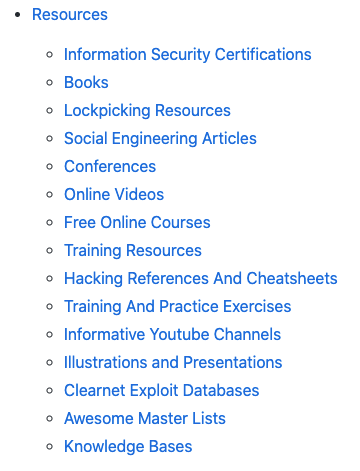
Here is a look at their resource list:
This repository also covers “OSINT Tools Used” and “Exploitation Enumeration and Data Recovery Tools” in addition to the aforementioned resources.
Machine learning (ML) is a subset of artificial intelligence (AI) that provides systems the ability to automatically improve and learn from experience without explicit programming. ML has led to important advancements in a number of academic fields, including robotics, healthcare, natural language processing, and many more. With the ever-growing concerns over data privacy, there has been an increasing interest in privacy-preserving ML. In order to protect the privacy of data while still allowing it to be used for ML, various privacy-preserving schemes have been proposed. Here are some of the main schemes:
Secure multiparty computation (SMC) is a type of privacy-preserving scheme that allows multiple parties to jointly compute a function over their data while keeping their data private. This is achieved by splitting the data up among the parties and having each party perform a computation on their own data. The results of the computations are then combined to obtain the final result.
Homomorphic encryption (HE) is a type of encryption that allows computations to be performed on encrypted data. This type of encryption preserves the structure of the data, which means that the results of the computations are the same as if they had been performed on unencrypted data. HE can be used to protect the privacy of data while still allowing computations to be performed on that data.
Differential privacy (DP) is a type of privacy preservation that adds noise to the data in order to mask any individual information. This noise is added in a way that it does not affect the overall results of the data. This noise can be added in a variety of ways, but the most common is through the Laplace mechanism. DP is useful for preserving privacy because it makes it difficult to determine any individual’s information from the dataset.
Gradient masking is a technique that is used to prevent sensitive information from being leaked through the gradients of an ML model – the gradients are the partial derivatives of the loss function with respect to the model parameters. This is done by adding noise to the gradients in order to make them more difficult to interpret. This is useful for privacy preservation because it makes it more difficult to determine the underlying data from the gradients.
Security enclaves (SE) are hardware or software environments that are designed to be secure from tampering or interference. They are often used to store or process sensitive data, such as cryptographic keys, in a way that is isolated from the rest of the system.
There are many ways to preserve privacy when working with ML models, each with their own trade-offs. In this article, we summarised five of these methods. All of these methods have strengths and weaknesses, so it is important to choose the right one for the specific application.
Today, I was invited to give a two-hour guest lecture about cybersecurity and the IoT to Lund University students. I introduced students to some state-of-the-art attacks that target IoT devices, networks, and services.
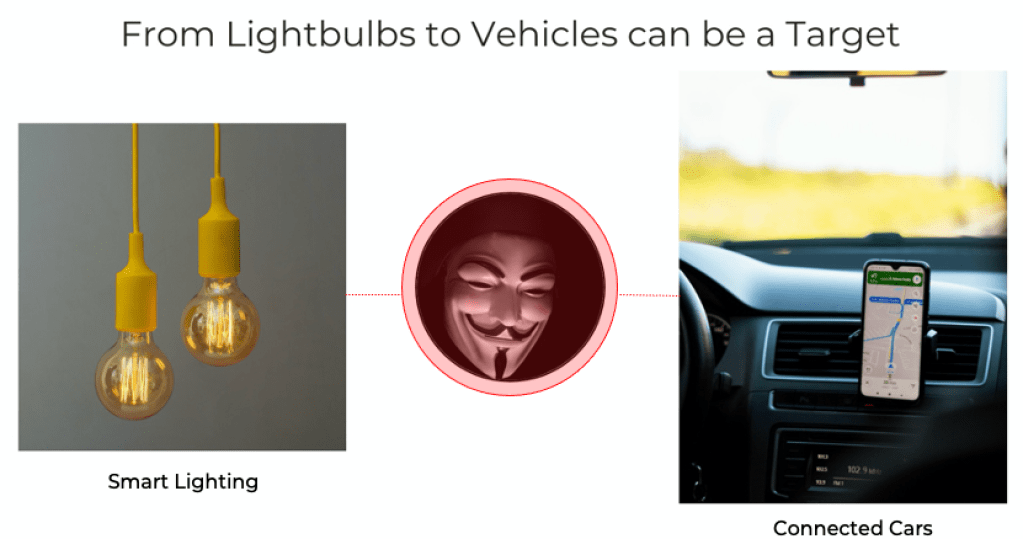
Everything can be a target when connected to the Internet, from a benign-looking device like a smart light bulb to a sophisticated system such as an electric car. Most of these things (which are often called smart objects) tend to be connected to public clouds, making them prone to remote attacks, ranging from misconfiguration to hijacking of accounts to malicious insiders, and more.
I also highlighted that it appears to be a growing trend that fewer vulnerabilities are being reported by various nations than before, specifically fewer vulnerabilities being reported by China. This could suggest that certain nations are covertly stockpiling vulnerabilities in order to strategically exploit them, perhaps for espionage purposes, but also for more nefarious purposes.
Anyway, in case you want to learn more about cyber security and the IoT, you are welcome to get in touch.
When working on your Ph.D., it is imperative to maintain a state of flow. Maintaining a state of flow will give you more motivation towards achieving your goals and finishing work in a timely manner. In addition, maintaining a state of flow will help keep you from getting distracted by less important tasks that are not related to your work, such as checking Instagram, TikTok, Twitter, and other social media platforms.
As Mihaly Csikszentmihalyi asserts in his book “Flow: The Psychology of Optimal Experience”, flow is “the state in which people are so involved in an activity that nothing else seems to matter; the experience itself is so enjoyable that people will do it even at great cost, for the sheer sake of doing it”. Flow is a state in which you are so focused on your work that all other distractions fade away. It is a state in which you are completely immersed in what you are doing, and it is very difficult to pull you out of it. Many Ph.D. students struggle with maintaining a state of flow in their research work. They want to work hard and do well, but they just cannot seem to find the motivation or energy needed to complete their projects. Here are four tips that might help you achieve flow:
Photo by Scott Graham on Unsplash
1) If you want to be able to write effectively, then you need to set aside time each day for writing. This can be done by creating a schedule and sticking to it. The schedule needs to include the amount of time that you will be spending on your writing tasks each day, as well as any breaks that you plan on taking during the day.
2) Before sitting down, make sure you have everything ready — your notes/laptop/pencils/paper/etc. — so that when it comes time to work on something important, there are no delays caused by having to look for something else first, rather than just getting started right away without any more delays than necessary.
3) Disable any notifications from social media platforms including televisions and phones so that they do not distract you while working on your project. You can always check these platforms or media after completing your tasks for the day, but if they are distracting, then they should be turned off for better focus during working hours.
4) Take frequent breaks, but keep them short and to the point. Consider also using the Pomodoro Technique. The Pomodoro Technique is a time management technique where you work using 25-minute work sprints and then enjoy a 5-minute break.
It is just as important to maintain a state of flow as it is to establish one at the start of your work. The two things go hand in hand. However, maintaining flow can be more difficult at times because some things that interrupt flow are not always avoidable. In order to stay on top of your Ph.D. while maintaining a state of flow, you need to be organized and efficient. By setting aside enough time each day for writing and making sure that you have everything ready before sitting down to work, you will be able to focus more fully on the task at hand, which should contribute towards maintaining a state of flow.
On Wednesday, August 18th, I attended the Teaching Apprenticeship conference at Blekinge University of Technology. The conference was held in a hybrid format, meaning that we could attend sessions both in person and remotely. The conference was informative, and I came away with a greater understanding of how to further improve my teaching.
The theme for this year’s conference was active academic teaching for pedagogical development. The goal of this theme is to increase awareness of educational quality and learning in higher education among educators, educational developers, librarians, and other people with an interest in the subject.
I really enjoyed the keynote given by Klara Bolander Laksov and Max Scheja, both professors of higher education pedagogy. They discussed the dimensions of academic teachership, the role of pedagogical leadership, and provided examples of what can be done at various levels of academic teachership. I also enjoyed learning more about blended learning from a theoretical perspective. New methods of learning—and new technology to support them—are necessary for students who will be entering the workforce in just a few short years.
A primary objective of higher education is to provide students with the ability to think independently and critically. The ability to use knowledge and skills with judgment, as well as demonstrate higher-level thinking skills, is essential in many academic disciplines. As teachers of students across Sweden and around the world, we must be willing to change our teaching styles and adapt to new methods and technologies to aid in fostering critical thinking in our students.
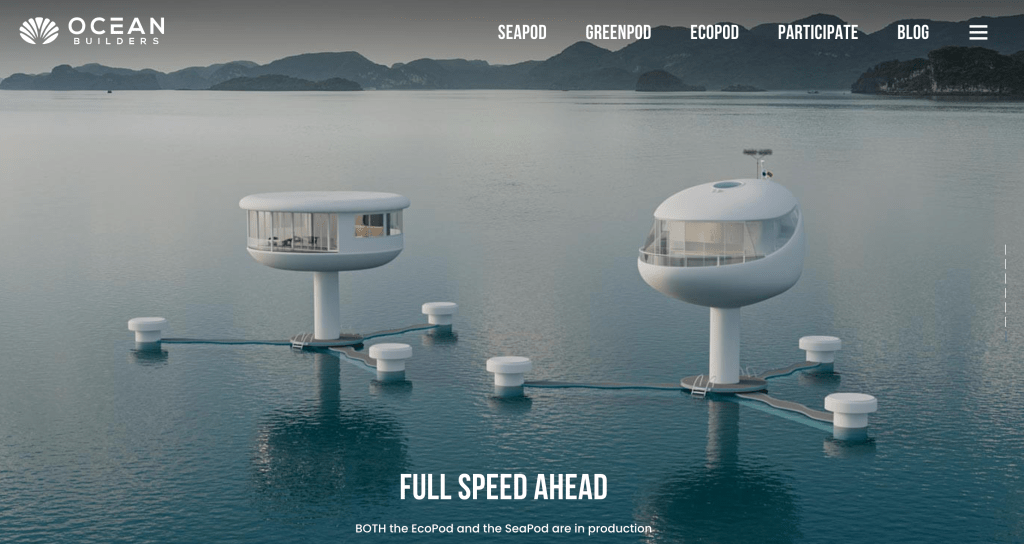
Ocean Builders has just unveiled its fleet of revolutionary living pods, which bring together luxury living and smart home technology. The pods are currently under construction in the Linton Bay Marina on the north coast of Panama and are described as the “world’s first eco-restorative homes”.
Some things, like food and medication, may be delivered by drones, while an autonomous vessel may be utilized as an ocean recycling vessel to collect waste and maintain a clean environment. The pods will also be equipped with special “smart rings” that enable residents to unlock doors and switch their music on at the wave of a hand.
Would you be interested in owning one of these homes? Do you think these homes are better equipped to safeguard our privacy and security?
The practice of gathering, analyzing, and profiting from data about individuals is known as commercial surveillance. Due to the volume of data gathered by some companies, individuals may be vulnerable to identity theft and hacking. Indeed, the dangers and stakes of errors, deception, manipulation, and other abuses have increased as a result of mass surveillance. The Federal Trade Commission (FTC) is seeking input from the general public on whether additional regulations are necessary to safeguard individuals’ privacy and personal data in the commercial surveillance economy.
Photo by Lianhao Qu on Unsplash.
I advise you to attend the open forum on September 8, 2022, particularly if you are a researcher focusing on the topic of privacy and security. Also, if you are developing your own system or perhaps planning your next research project, I highly recommend you look at some of the topics identified by the FTC as these are likely to affect the design of your project. Here are the topics mentioned: “Harms to Consumers”, “Harms to Children”, “Costs and Benefits”, “Regulations”, “Automated Systems”, “Discrimination”, “Consumer Consent”, “Notice, Transparency, and Disclosure”, “Remedies”, and “Obsolescence”. Pay particular attention to the topic “Automated Systems” if your system uses AI/ML technologies.
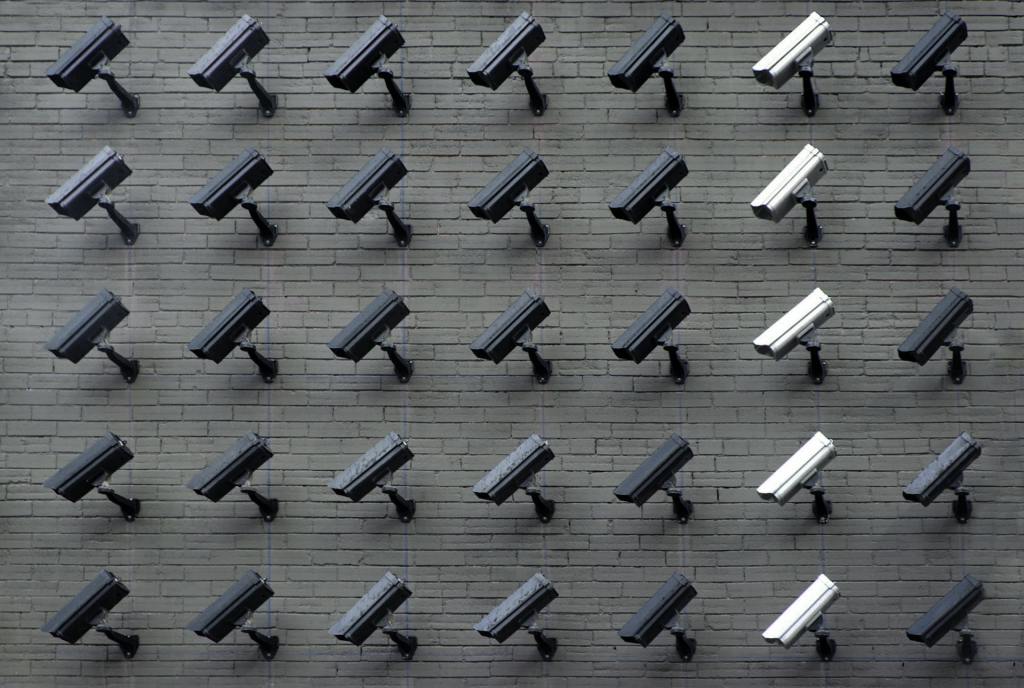
The security cameras in our smart homes from well-known smart home brands like Amazon and Google might not just be watching over our pets. According to an article in The Verge, they can also aid law enforcement in their investigations of crimes, but only if we do not mind the police viewing our footage without a warrant.
That implies that the police can access our private information without first presenting proof that an emergency situation exists. Police will probably only make use of this access for lawful objectives, such as preventing crime or attempting to locate a missing person in need of assistance. However, it does raise some issues regarding what may transpire when this technology becomes even more widely used and available.
What if, for instance, this access is utilized to locate and detain activists or protestors who have not breached any laws? Citizens may only exercise caution when shopping, be aware that their smart device may record personal information, and, if possible, enable end-to-end encryption.
If you have any questions about how to secure your smart home, do not hesitate to contact me.
You are lucky if you are already thinking about writing your first scientific publication based on your Ph.D. work. Writing a publication is one of the most important skills that any researcher must acquire during their Ph.D. period. However, students often ask the question, of whether they should wait for “perfect” results before publishing their first paper.
My advice is to write when your work is mature enough that you can cut it into bite-sized pieces that interest others, and then go ahead and start writing. At the end of the day, writing is a cyclical process, and you can only get better at it by writing. Apart from the personal satisfaction of completing an article and seeing it accepted in a peer-reviewed journal/conference, it gets you excited about the project (it gives you motivation). It also makes it much easier for you to progressively make progress by writing in steps and establishing milestones. In doing so, when you get to the final rewriting stage, it will not feel like a mountain to climb. It should be something that builds naturally upon what has already been done.
So, I personally think that the quicker you start to publish, the quicker you will build up a track record of publications. You can use this track record to get funding or a job at the end of your Ph.D., which is key for your career.
With an increasing number of companies providing consumers with their smart home products and related services, smart homes are quickly becoming the norm. This trend is likely to continue in the future, as more people are realizing the benefits of having a smart home.
Source: UR.se
Making a home smarter with sensing technologies can seem like a good idea, but it also gives attackers an opportunity to break into your devices and steal your personal data. This could be a problem for you and your family if you have smart devices in your home without having configured them properly or regularly updated them.


 Joseph Bugeja