Safeguarding the Future: My IoT Security Lecture at Lund University

Last Thursday, I had the honor of delivering an online lecture at Lund University, focusing on IoT security. The lecture addressed the core threats targeting IoT systems and the essential security measures to protect these devices from potential harm. In an increasingly interconnected world, the critical role of IoT security cannot be overstated.

As we continue to witness the exponential growth of IoT devices, it is crucial to prioritize security measures. The potential consequences of a security breach can be catastrophic, and we must remain vigilant in safeguarding our digital assets.

It is always a pleasure to share my expertise and insights on cybersecurity and IoT to guide the next-generation. I appreciate the opportunity and eagerly await what the future has in store.

My First Lecture at the University of Malta

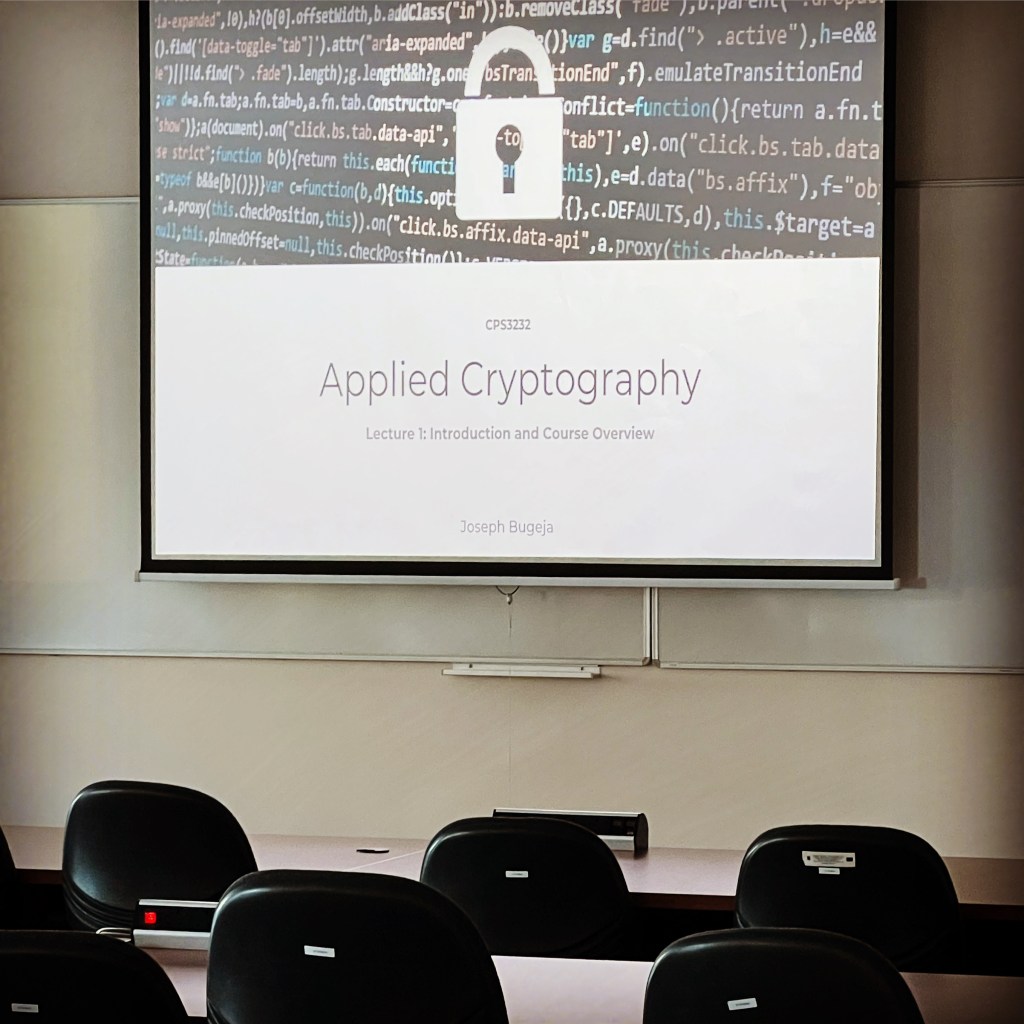
Snapshot of the title slide captured prior to the lesson.

I initiated the Applied Cryptography course at the University of Malta on Monday evening. As a cyber security professional and academic with a strong commitment to the field of information security, I am genuinely excited to be leading this specialized academic course this year.

Throughout the introductory lecture, I delved into the foundational concepts of cryptology, emphasizing its profound relevance within contemporary security applications. The pedagogical discourse traversed a diverse spectrum of topics, encompassing cryptographic mechanisms, the examination of classical substitution ciphers and their formal representations, a concise introduction to cryptanalysis, and more.

I am excited to be a part of this journey and look forward to the next lecture in this course on Monday!

The Evolution of Cybersecurity: NIST Cybersecurity Framework 2.0

Photo by Tima Miroshnichenko on Pexels.com

The National Institute of Standards and Technology (NIST) reached a significant milestone on August 8, 2023, with the release of the draft for NIST Cybersecurity Framework (CSF) 2.0. This step marks a positive advancement since its inception in 2014. The CSF is a cornerstone in reducing cybersecurity risks, offering comprehensive guidance to organizations in comprehending, evaluating, prioritizing, and communicating these risks, along with actionable measures to mitigate them.

CSF 2.0 extends its influence, delivering invaluable cybersecurity insights to organizations of diverse sizes and industries. A pivotal change is evident in the revised title, which omits the term “Critical Infrastructure” (previously named “Framework for Improving Critical Infrastructure Cybersecurity”), highlighting its broader applicability.

At the core of CSF 2.0 lies an intensified emphasis on the indispensable role of governance in the realm of cybersecurity. Acknowledging its foundational significance, strong governance emerges as the bedrock of an effective cybersecurity program. By positioning governance as the cornerstone, the framework guides organizations in steering the other five functions—identify, protect, detect, respond, and recover—aligned with their mission and stakeholder expectations.

A compelling highlight of the draft pertains to the criticality of supply chain risk management. It underscores the imperative need for holistic risk management programs that address the vulnerabilities associated with suppliers. Additionally, a clarion call for proactive third-party risk monitoring resonates throughout the document, underscoring the importance of a vigilant stance.

In an era characterized by dynamic cyber threats, the adoption of advanced frameworks becomes an inescapable imperative. The integration of NIST CSF 2.0 into our strategic cybersecurity approach is paramount. Furthermore, forging alliances with industry leaders amplifies our collective efforts in fortifying our digital defenses against the ceaselessly evolving landscape of digital threats.

In conclusion, NIST Cybersecurity Framework 2.0 signifies a monumental stride towards bolstering our digital resilience. By embracing its principles and fostering collaborative partnerships, we equip ourselves to navigate the complex challenges posed by the digital age.

Read more here: https://www.nist.gov/news-events/news/2023/08/nist-drafts-major-update-its-widely-used-cybersecurity-framework

Data Security and Privacy in the Era of Floating Homes

Slightly over a year ago, I mentioned Ocean Builders’ innovative living pods and how they are using smart home technologies in their vessels. Now, a new contender, Reina, takes the stage. Reina’s flagship yacht home model, the luxurious Reina Live L44DR, showcases not only lavishness but enhanced comfort and convenience also by incorporating smart home functionalities (smart TV, smart speakers, etc.).

The transition from a fixed abode to a mobile dwelling incites inquiry. Can a floating home offer a higher degree of security and privacy compared to its stationary counterpart? Do the potential challenges of connectivity experienced within the realm of floating homes share similarities with those encountered in the context of connected cars and trucks? Beyond concerns about location privacy, the intricate facets of this discourse warrant scholarly exploration, as the enduring appeal of these aquatic residences persists. This theme was also briefly addressed in one of the recent conferences at which I presented.

Tips for Excelling in Your Ph.D. Defense

Photo by Lukas on Pexels.com

As you embark on the final leg of your academic journey, the Ph.D. defense stands as a pivotal milestone. This defining moment offers you the chance to present your research to a panel of esteemed experts and vigorously defend your work against their probing inquiries. Successfully conquering your defense will culminate in the grand achievement of being awarded your Ph.D. degree.

Drawing from my own personal experience, where I defended my thesis now over two years ago, I am eager to share with you some tips on how to prepare for your own Ph.D. defense:

  1. Embrace an intimate familiarity with your thesis: Your thesis should become ingrained in your mind. Be ready to elucidate your research questions, methods, findings, and conclusions with utmost precision and detail.
  2. Rehearse your presentation relentlessly: Practice makes perfect, as they say. Take advantage of a mirror, or better yet, enlist the support of a trusted friend or family member as your audience. This exercise will help you become comfortable with your material and identify areas that may require improvement.
  3. Anticipate the inevitable: Ponder the possible questions your opponent, examiner, committee members, and perhaps the invited audience might pose. Consider the strengths and weaknesses of your research, as well as the broader implications of your findings. Equip yourself with clear and concise answers to address these questions with confidence.
  4. Attend other Ph.D. defenses: Make an effort to attend other Ph.D. defenses within your department or university. Observing how fellow students defend their work offers invaluable insights into different presentation styles, strategies for handling questions, and a broader perspective on the defense process.

By incorporating these tips into your preparation regimen, you can enhance your chances of a triumphant Ph.D. defense. With meticulous groundwork, you are poised to confidently defend your work and emerge triumphant in your Ph.D. defense.

The Diamond Model of Intrusion Analysis

Photo by Michael Morse on Pexels.com

In the world of cyber security, effectively processing data and turning it into actionable intelligence is crucial. While the Cyber Kill Chain® and the MITRE ATT&CK Framework are commonly used methodologies, there is perhaps a lesser-known alternative called the Diamond Model of Intrusion Analysis. Developed in 2013 by renowned cyber security professionals, Sergio Caltagirone, Andrew Pendergast, and Christopher Betz, this model is an indispensable resource for cyber security professionals. It offers a simple yet powerful way to analyze and document intrusion incidents.

The Diamond Model is composed of four features: adversary, infrastructure, capability, and victim. The adversary represents individuals, groups, or organizations that exploit vulnerabilities to achieve their goals. Capability encompasses the tools, techniques, and methods used by adversaries, while infrastructure refers to communication systems like IP addresses and domain names. Victims can be individuals, organizations, or specific assets such as target email addresses. In addition, it delineates supplementary meta-features that bolster higher-level constructs, while also incorporating measurement, testability, and repeatability to deliver a more encompassing scientific approach to analysis.

Despite its unassuming appearance, the Diamond Model possesses the ability to swiftly navigate intricate and multifaceted details. The dynamics of a threat actor exist in a perpetual state of flux, as attackers continuously modify their infrastructure and capabilities. Moreover, when integrated with the Cyber Kill Chain® and other frameworks, it contributes to the establishment of a comprehensive cyber security framework. This integration facilitates a deeper understanding of threats and strengthens incident response capabilities, empowering a more proactive defense posture.

An example of using the Diamond Model in practice is found here.

Realizing the Potential of Machine Learning with Python Libraries

Photo by Pixabay on Pexels.com

In the realm of data science, machine learning stands out as a powerful approach to problem-solving by harnessing the potential of data. Unlike traditional programming, where solutions are explicitly defined, machine learning involves enabling computers to learn and find solutions autonomously. This article will focus on the pivotal role of machine learning libraries in Python, highlighting their significance in creating and training machine learning models for a variety of applications.

Python offers a plethora of libraries dedicated to machine learning, each with its own unique strengths and capabilities. These libraries have been instrumental in shaping my journey as a researcher, enabling me to unlock valuable insights and make data-driven decisions. Alongside a team of skilled researchers, I have had the privilege of utilizing various libraries, with Scikit-learn playing a particularly vital role in our work.

Scikit-learn, built on top of the powerful NumPy and SciPy libraries, has been an invaluable asset in our machine learning endeavors. Its vast collection of classes and functions provides a solid foundation for implementing traditional machine learning algorithms. From classification and regression to clustering and dimensionality reduction, Scikit-learn has been our go-to library for a wide range of tasks.

However, the power of machine learning extends beyond our research endeavors. As we explored earlier in our blog series, machine learning has proven to be an indispensable tool for threat hunting. By leveraging the capabilities of machine learning libraries, organizations can effectively detect and combat cyber threats, enhancing their security posture and safeguarding sensitive data.

Now, let us delve into some of the popular machine learning libraries that have significantly improved the field:

  1. TensorFlow: Renowned as a leading framework in deep learning, TensorFlow enables the resolution of intricate problems by defining data transformation layers and fine-tuning them iteratively. Its extensive ecosystem and diverse set of tools make it a preferred choice for constructing and training sophisticated deep learning models.
  2. PyTorch: Positioned as a robust and production-ready machine learning library that has garnered significant recognition, PyTorch excels in addressing complex deep learning challenges by harnessing the computational power of GPUs. Its dynamic computational graph and intuitive interface make PyTorch a preferred choice for flexible and efficient model development.
  3. Keras: Renowned for its user-friendly interface and high-level abstractions, Keras simplifies the development of neural networks. Its seamless integration with TensorFlow enables rapid prototyping and deployment of deep learning models.

These machine learning libraries—Scikit-learn, TensorFlow, Keras, and PyTorch—play an indispensable role in unlocking the predictive potential of data and driving innovation across diverse domains.

In summary, Python’s rich ecosystem of machine learning libraries are powerful tools for building, training, and deploying machine learning models. Through my own usage and exploration, I have found these libraries to be incredibly helpful, with Scikit-learn being particularly influential in my work. Furthermore, the impact of machine learning extends to critical domains such as threat hunting and cyber security, empowering organizations to proactively address emerging threats and safeguard their valuable assets.

Essential Skills for Effective Threat Hunting

Photo by Harrison Haines on Pexels.com

In today’s cyber security landscape, where cyber threats continue to evolve in sophistication, organizations must adopt proactive approaches to safeguard their networks and sensitive data. Threat hunting, a human-driven and iterative process, has emerged as a crucial aspect of cyber security. This article aims to highlight the essential skill set required to become a successful threat hunter.

Threat hunting tends to operate under the assumption that adversaries have already breached an organization’s defenses and are hiding within the corporate network. Unlike traditional security measures that tend to rely solely on automated detection tools and known indicators of compromise (IoCs), threat hunting leverages human analytical capabilities to identify subtle signs of intrusion that automated systems may miss.

A successful threat hunter requires a diverse skill set to navigate the complexities of modern cyber threats effectively. Here are some essential skills for aspiring threat hunters:

  • Cyber threat intelligence. Understanding cyber threat intelligence is foundational for any threat hunter. It involves gathering, analyzing, and interpreting information about potential threats and threat actors. This knowledge provides valuable insights into advanced persistence threats, various malware types, and the motivations driving threat actors.
  • Cyber security frameworks. Familiarity with frameworks like the Cyber Kill Chain and ATT&CK is invaluable for threat hunters. The Cyber Kill Chain outlines the stages of a cyber attack, from initial reconnaissance to the exfiltration of data, helping hunters identify and disrupt attack vectors. ATT&CK provides a comprehensive knowledge base of adversary tactics and techniques, aiding in the understanding of attackers’ behavior and their methods.
  • Network architecture and forensics. A strong grasp of network architecture and forensic investigation is crucial for analyzing network activity, identifying anomalous behavior, and tracing the root cause of security incidents. Additionally, threat hunters must be comfortable working with extensive log data and extracting meaningful insights from them.
  • Coding and scripting. Proficiency in coding and scripting languages, such as Python, PowerShell, or Bash, can be highly beneficial for threat hunters. These skills allow them to automate repetitive tasks, conduct custom analysis, and develop tools to aid in their investigations.
  • Data science. Threat hunting often involves dealing with vast amounts of data. Data science skills enable hunters to develop algorithms, create statistical models, and perform behavioral analysis, significantly enhancing their ability to detect and respond to threats effectively.
  • Organizational systems. Each organization operates differently, and threat hunters need to be well-versed in their organization’s systems, tools, and incident response procedures. This knowledge allows them to discern deviations from normal activity, leading to quicker response times and more accurate threat assessments.
  • Collaboration and communication. Threat hunters often work in teams and collaborate with other cybersecurity professionals. Strong communication skills are essential for sharing findings, coordinating responses, and effectively conveying complex technical information to non-technical stakeholders.

Threat hunting is not a one-size-fits-all approach, but a personalized, data-driven, and iterative process tailored to an organization’s unique risk profile. Cultivating a skilled team and proactive culture bolsters defenses against dynamic cyber threats. Staying informed, collaborating, and embracing technology ensures success in securing organizations from advanced adversaries.

Security and Ethical Risks of Using Large Language Models for Code Generation

Photo by Pixabay on Pexels.com

The rise of Large Language Models (LLMs) has revolutionized software development, offering developers the ability to generate code at an unprecedented scale. While LLMs like ChatGPT have proven to be powerful tools, they come with security and ethical risks that developers must be cautious about.

  1. Vulnerable code: LLMs are trained on extensive datasets, including code with potentially known vulnerabilities. This makes them prone to inadvertently produce code susceptible to attacks like SQL injection. Additionally, LLM-generated code might contain malicious elements like viruses or worms, and inadvertently leak sensitive data such as passwords or credit card numbers, putting users and organizations at grave risk.
  2. Challenges in code maintenance and comprehensibility: LLMs have the capability to generate intricate code that can be challenging to comprehend and maintain. The complexity introduced by such code can pose significant obstacles for security professionals when it comes to identifying and addressing potential security flaws effectively.
  3. Ethical and legal concerns: The use of LLMs for code generation raises ethical issues regarding code plagiarism, where developers might copy others’ work without proper attribution. Moreover, generating code that infringes on copyright can lead to severe legal consequences, hindering innovation and discouraging original contributions.

In conclusion, LLMs revolutionize software development with unprecedented code generation capabilities. However, caution is crucial due to security and ethical risks. Collaborative efforts for better comprehension and flaw identification are essential. Respecting intellectual property fosters an ethical coding community. By acknowledging risks and adopting responsible practices, developers can maximize LLMs’ benefits while safeguarding software integrity and security in this era of advancement.

EU Data Initiatives: Developments to Watch in 2024 and Beyond

The European Union (EU) has been at the forefront of global efforts to protect privacy and personal data. Over the years, the EU has implemented several initiatives and regulations that aim to safeguard the privacy rights of its citizens. The International Association of Privacy Professionals (IAPP) has created a timeline of key dates for these EU regulations and initiatives, including those that are yet to be finalized.

Photo by freestocks.org on Pexels.com

Here are the key dates to watch out for the year 2024 and beyond:

  • February 17, 2024: The Digital Services Act (DSA), which aims to establish clear rules for online platforms and strengthen online consumer protection, will become applicable
  • Spring 2024: The AI Act is expected to be adopted
  • Mid-2024: The Data Act is expected to enter into force
  • October 18, 2024: The NIS2 directive will become applicable
  • January 17, 2025: The DORA regulation will become applicable

In conclusion, the EU’s data initiatives are set to undergo significant changes in the coming years with the implementation of regulations like the DSA, AI Act, Data Act, NIS2 directive, and DORA regulation. These initiatives aim to establish clear rules for online platforms, strengthen online consumer protection, facilitate data sharing, and more. It is crucial for organizations, including individuals, to stay up-to-date with these key dates to ensure compliance with the new regulations and to take advantage of the opportunities they present.

For a more detailed overview of the EU’s data initiatives and their key dates, check out the infographic created by the IAPP here.